
Barangaroo NSW 2000

Where the glass inclusion stops in a Barangaroo commercial tower

Glass is the single most misread line in a tower scope. A tenant reads windows and pictures the view; a scope means the internal face of the partition beside the lift lobby. The gap between those two readings is an access system, a licence and a separate contractor.

In short

On a standard tenancy scope in Barangaroo, glass inclusions cover internal faces reachable from the floor: partitions, meeting room fronts, entry doors, balustrade panels at hand height and spot removal of marks. External faces, anything above safe reach and anything requiring a platform, cradle or rope access are excluded.

That exclusion is about method, not willingness. Facade access on a tower is a specialist discipline with its own equipment, training and permits, and it is normally arranged through the building rather than a tenancy cleaner. Clean Best states the internal glass boundary in the fixed written proposal so nobody is relying on the word windows.

What internal glass actually means in a fitted-out floor

A modern tenancy is mostly glass at eye level. Meeting room fronts, sliding doors, reception screens, whiteboard walls and internal balustrades all show fingerprints within hours of a busy day. A routine inclusion typically covers spot removal on those surfaces plus a full clean of the entry doors, because those two together produce most of the visible improvement a floor gets from glass work.

A full detailed clean of every internal pane is a different task. It takes considerably longer, it needs the floor quiet, and doing it every attendance would consume time the amenities and kitchens need more. Placing it in periodic work with a stated cycle is the arrangement that keeps both outcomes achievable, and it is what a proposal should say rather than listing glass once and leaving it open. Naming the cycle also gives the office manager something to point at when a floor is being prepared for visitors.
The line at safe reach, and why it is not negotiable

Above a certain height a cleaner needs equipment, and the moment equipment is involved the task changes category. A short step for a door header is ordinary. A ladder against a glass wall in a void, a platform in an atrium or anything over a floor edge is not, and no amount of care makes it so. Height work has its own training requirements, and a general cleaning method does not satisfy them.

This is why an inclusion list should describe reach rather than name rooms. Saying accessible from floor level, without ladders or platforms, tells a cleaner and a client the same thing in every room of the building. It removes the situation where somebody improvises with a chair because a pane looked close enough, which is where most height incidents in offices actually begin. The rule is written into the proposal rather than left to individual judgement.

The external face and who arranges it

External glazing on a tower is generally a base-building service, managed by the owner or the facility management team, and delivered by a contractor equipped for facade access. A tenancy cleaner does not schedule it, price it or perform it. Tenants sometimes assume otherwise because the interior looks worse when the exterior is dirty, but the two are different agreements with different providers.

The useful step for a tenant is to know the answer before it becomes a complaint. The proposal should say the external face is excluded and that the building arranges it, which gives the office manager something concrete to raise with building management. Where a low-rise or ground-level external pane is genuinely accessible from the ground, that can be assessed separately on its own merits.

Glass boundary items for a Barangaroo tenancy

  • Which internal glass is spot-cleaned on every visit
  • Which glass sits in periodic detail work, and on what cycle
  • A reach limit written as a method, not a room list
  • Named exclusion of external faces and facade access
  • Who arranges base-building window cleaning
  • How balustrade and void-adjacent glass is treated
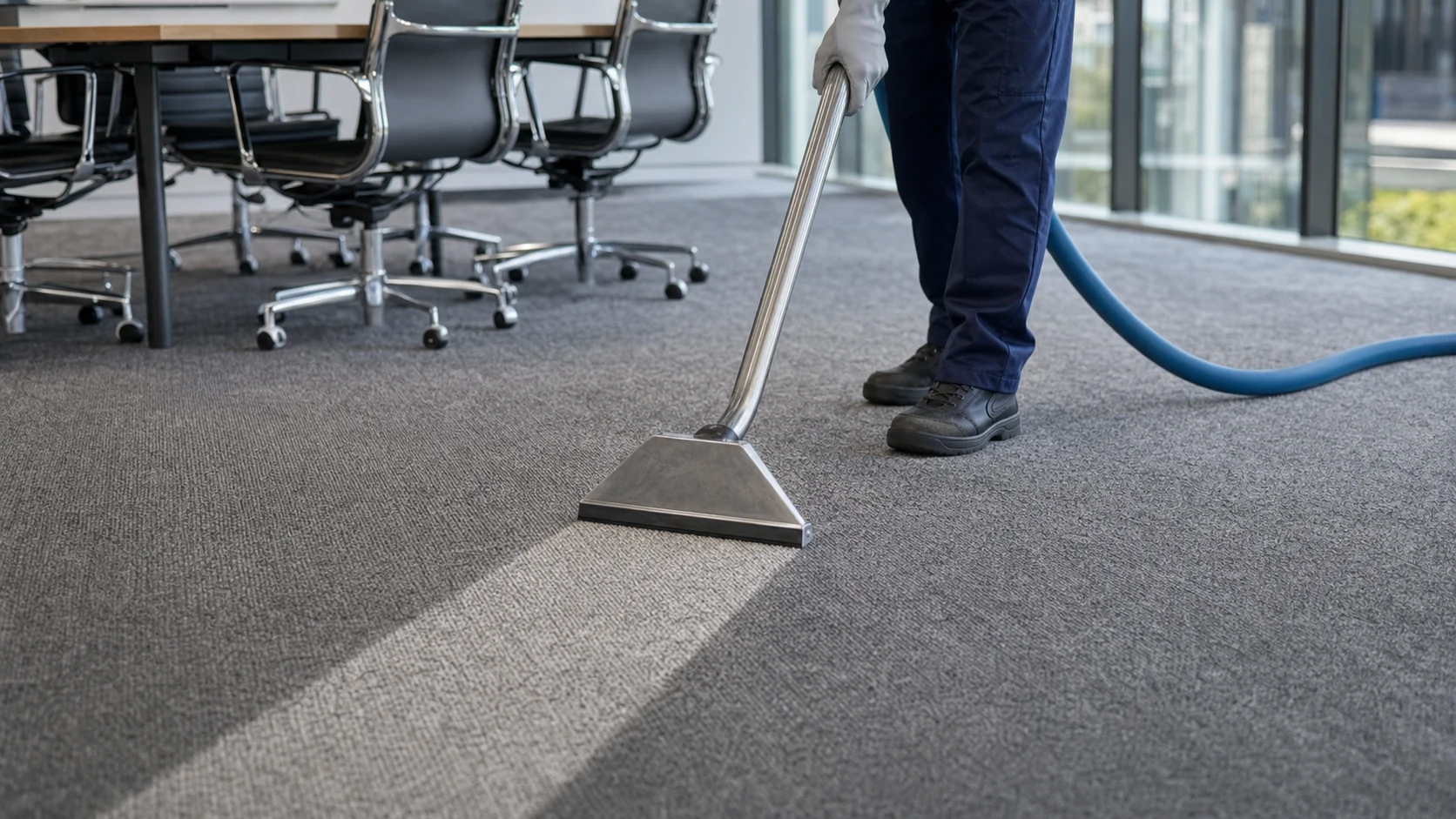
Clean Best completing scheduled periodic carpet cleaning in Sydney

Working in Barangaroo and the Sydney CBD

Barangaroo in the Sydney CBD is premium offices, hospitality venues and waterfront commercial towers, where tenancies are fully glazed internally and the facade is managed as a building asset rather than a tenancy one. Floor plates are large, occupancy is dense and presentation expectations are high, which makes the difference between spot-cleaning glass and detailing it a meaningful cost and time question. Clean Best services Barangaroo from Seven Hills, and access arrangements including dock bookings and after-hours entry are confirmed with building management before a scope is finalised.

Questions about Barangaroo

Are the windows included in our tenancy clean?

Internal faces reachable from floor level normally are. The external face of the facade is not, and neither is any internal glass that needs a ladder, platform or cradle. Facade work is a specialist service with its own access equipment and training, usually arranged through building management rather than through a tenancy cleaning agreement.

How often is internal glass fully detailed?

That is set as a periodic cycle in the proposal rather than left open. Routine visits normally cover entry doors and spot removal of marks, which is what keeps a floor looking maintained day to day. A full detail across every pane takes a quiet floor and a longer window, so it is planned rather than attempted during a standard attendance.

Why will cleaners not use a ladder for a high pane?

Because work at height has training and equipment requirements that a general cleaning method does not meet, and improvising with a ladder or furniture is how most office height incidents happen. Describing the limit as reachable from floor level gives everyone the same rule in every room, rather than leaving it to a judgement call.

Who cleans the glass in the lift lobby and common areas?

In a multi-tenanted tower those areas are usually covered by the base-building cleaning arrangement rather than by a tenancy scope. Confirming that at the walkthrough avoids a tenant paying for surfaces already serviced, and avoids the reverse, where a common area sits between two agreements and receives no attention at all. Either outcome is better than discovering the gap after a tenant complaint.

Can you quote the external glazing anyway?

Not as part of a tenancy scope. Where facade access is required, the work is referred to a provider equipped and licensed for it. Ground-level external panes that can genuinely be reached from a footpath are a different case and can be assessed on their own, subject to the walkthrough and what the building permits.

Get a fixed written quote for Barangaroo

Free walkthrough, scope in writing, price back within 24 hours.

Request a quote
Call nowEmail us