
North Sydney NSW 2060

Locked rooms, occupied desks and the not accessed outcome in North Sydney

A scope assumes every room is available. In a corporate tower with staff working late and rooms held for meetings, that assumption fails several times a week, and what the scope says about those occasions decides whether it fails quietly or usefully.

In short

When a room is locked, occupied or otherwise unavailable, the standard response is that it is not accessed on that visit and the fact is recorded. Cleaners do not unlock rooms outside the agreed access, do not ask occupants to leave, and do not work around people at a desk.

The record is the important part. A room recorded as not accessed on six of eight visits is a pattern worth acting on. Clean Best states the response and the recording method in the fixed written proposal so the outcome is visible rather than absorbed.

Why the recording matters more than the missed room

One missed room is unremarkable; a room missed consistently is a service failure with a cause outside the cleaning provider's control. Without a record, both look identical from the client side, and the conversation eventually becomes about cleaning quality rather than about access. With a record, the discussion starts from evidence and moves quickly to a practical fix such as a different night, a key arrangement or a clearer booking practice.

It also protects the client's spend. A room that is never accessible is being paid for and never serviced, which is a straightforward waste that nobody notices without data. The record turns an invisible loss into a decision: change the access, change the timing, or remove the room from the scope and adjust the arrangement accordingly. Either way the site is making a decision with information rather than absorbing a cost it never saw.
Occupied desks and working staff

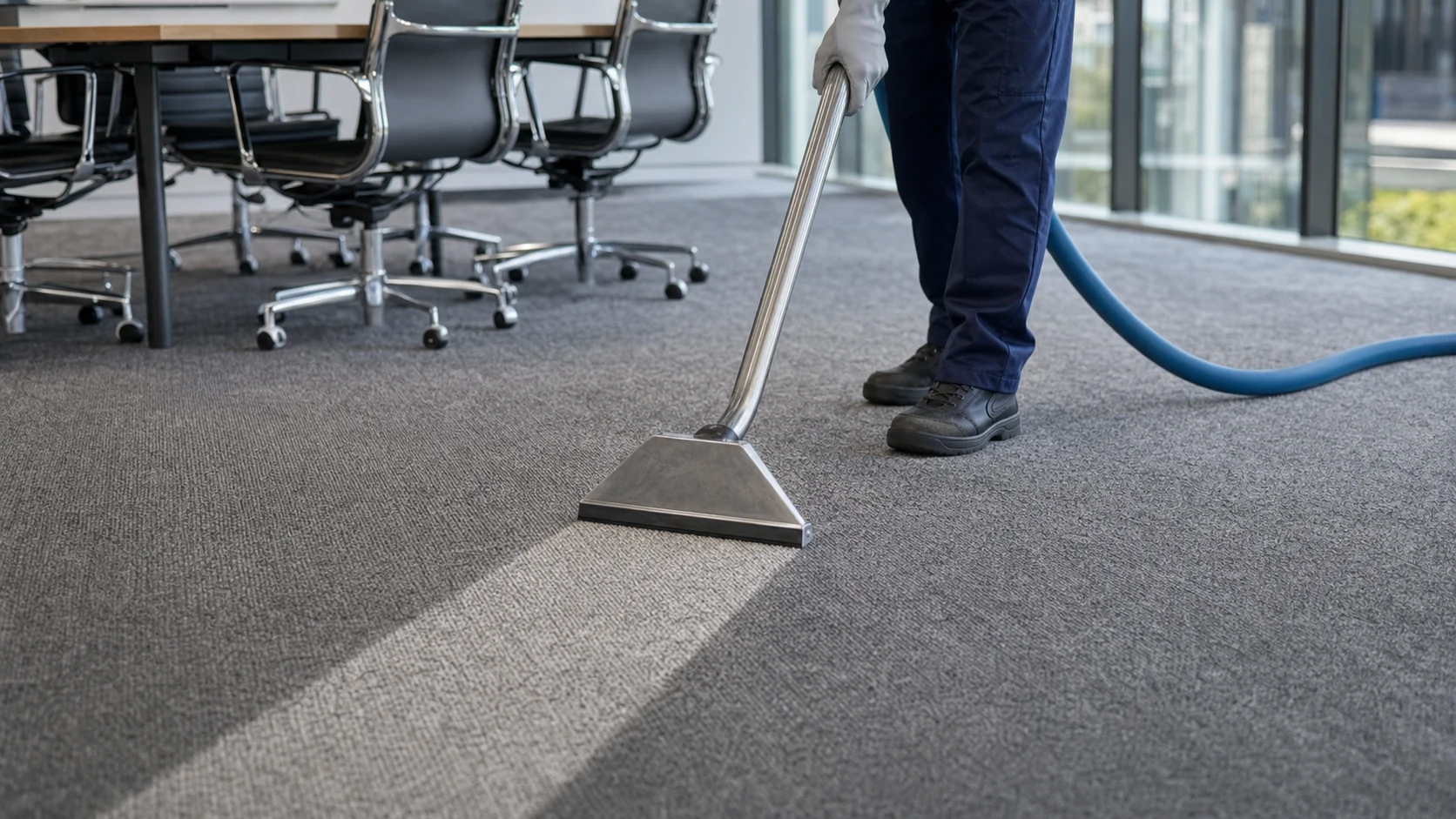
In a tower with people working late, part of a floor is often still occupied when cleaning starts. Cleaners work around occupied areas, clean what is available and do not interrupt anyone or ask them to move. Bins beside an occupied desk can usually be emptied if the person is comfortable with it, but nothing is assumed, and a person working with headphones on is left alone entirely.

The consequence is uneven coverage, and it is worth naming. A floor that always has a group working late in the same corner will have that corner cleaned less often than the rest. Either the schedule shifts, or the area is accepted as receiving less attention. Both are legitimate; what is not legitimate is an expectation that the coverage will somehow be complete anyway.

Getting access right at mobilisation

Most access problems are solved once at the start. Which rooms are locked and who holds keys, whether meeting rooms are booked into the evening, which floors have staff working late, whether after-hours air conditioning affects when work can happen, and how the team enters and leaves the building. Confirming that at mobilisation avoids a series of small failures that each look like carelessness.

It is also worth reviewing periodically, because tenancies change. A team that moves floors, a new meeting room booking pattern or a change to building access hours can quietly break an arrangement that worked for a year. A short check at each scope review keeps the access assumptions aligned with how the floor is actually being used. It takes a few minutes and prevents months of small, unexplained failures.

Access handling for a North Sydney tenancy

  • A defined not-accessed response rather than an improvised one
  • Recording of every room missed, with the reason
  • A rule that occupants are never asked to move
  • Which rooms are locked and who holds the keys
  • Known late-working areas identified at mobilisation
  • A periodic review as the floor's use changes
Clean Best completing scheduled periodic carpet cleaning in Sydney

Working in North Sydney and the Lower North Shore

North Sydney on the Lower North Shore is dominated by corporate towers, professional services and high-rise offices, where cleaning happens after hours in buildings that rarely empty completely. Meeting rooms are booked into the evening, project teams work late in predictable corners, and building access is controlled by systems that determine exactly when a team can be on a floor. That combination makes access, not effort, the main constraint on coverage. Clean Best services North Sydney from Seven Hills and confirms access arrangements with the tenant and building management before the first attendance.

Questions about North Sydney

What happens if a room is locked at cleaning time?

It is not accessed on that visit and the fact is recorded with the date and the reason. Cleaners do not unlock rooms outside the agreed access arrangement. The record is what matters: one missed room is unremarkable, but the same room missed repeatedly is a pattern with a cause that can be fixed.

Will cleaners work around staff who are still there?

They clean what is available and do not interrupt anyone or ask them to move. A bin beside an occupied desk can usually be emptied if the person is comfortable with it, but nothing is assumed. Someone working with headphones on is left alone entirely rather than approached during a shift. The rule is written so it does not depend on individual confidence.

Does that mean parts of our floor get cleaned less?

Yes, if the same area is consistently occupied. A corner where a team regularly works late will receive less attention than the rest of the floor. That is worth naming rather than discovering, because the practical options are to shift the schedule, arrange access differently or accept the reduced coverage knowingly. All three are legitimate; drifting into it unknowingly is not.

How do we use the not-accessed records?

As evidence for a decision. A room missed on most visits is being paid for and not serviced, which is a straightforward waste. The record turns that into a choice: change the access, change the timing, or take the room out of the scope and adjust the arrangement. Without it, the loss is invisible.

Should access be reviewed after the agreement starts?

Yes, because tenancies change. A team moving floors, a new booking pattern for meeting rooms or a change to building access hours can quietly break an arrangement that worked for a year. A short check at each scope review keeps the assumptions aligned with how the floor is actually being used. It is a short conversation with a disproportionate effect on coverage.

Get a fixed written quote for North Sydney

Free walkthrough, scope in writing, price back within 24 hours.

Request a quote
Call nowEmail us