
Penrith NSW 2750

What spot clean and detail clean actually mean in a Penrith building

Two phrases carry most of the ambiguity in a cleaning scope. Spot clean sounds like less and detail clean sounds like more, but neither means anything until somebody says which surfaces and to what standard. Both phrases need a surface and a standard attached before they mean anything at all.

In short

Spot clean should mean visible marks removed from a named surface where the surface and the substance allow, checked on every visit. Detail clean should mean the full surface covered including edges, corners, undersides and fixings, on a stated cycle. Each definition is attached to the surfaces it applies to.

Written that way, both are checkable. Written as bare phrases, neither is. Clean Best defines each term against the specific surfaces it applies to in the fixed written proposal, so a scope reader and a cleaner arrive at the same understanding without needing to ask.

Spot clean is a check plus a limited response

The useful version of spot cleaning has two parts: an inspection that happens every time, and a response that happens only when needed. Walls spot cleaned means the walls are looked at on every visit and visible marks at hand height are removed where the paint finish allows. That is achievable, verifiable and honest about the limit, since some marks on some finishes cannot be removed without damaging the paint.

The limit is the part usually left out. A flat or low-sheen paint marks easily and cleans poorly, and rubbing at a scuff often burnishes the surface into a shinier patch that looks worse than the mark. Saying that in the scope prevents an unwinnable expectation and shifts the conversation towards touch-up painting, which is where the real remedy sits. It also gives the building a realistic path to a better result rather than an argument about effort.
Detail clean is defined by coverage, not by effort

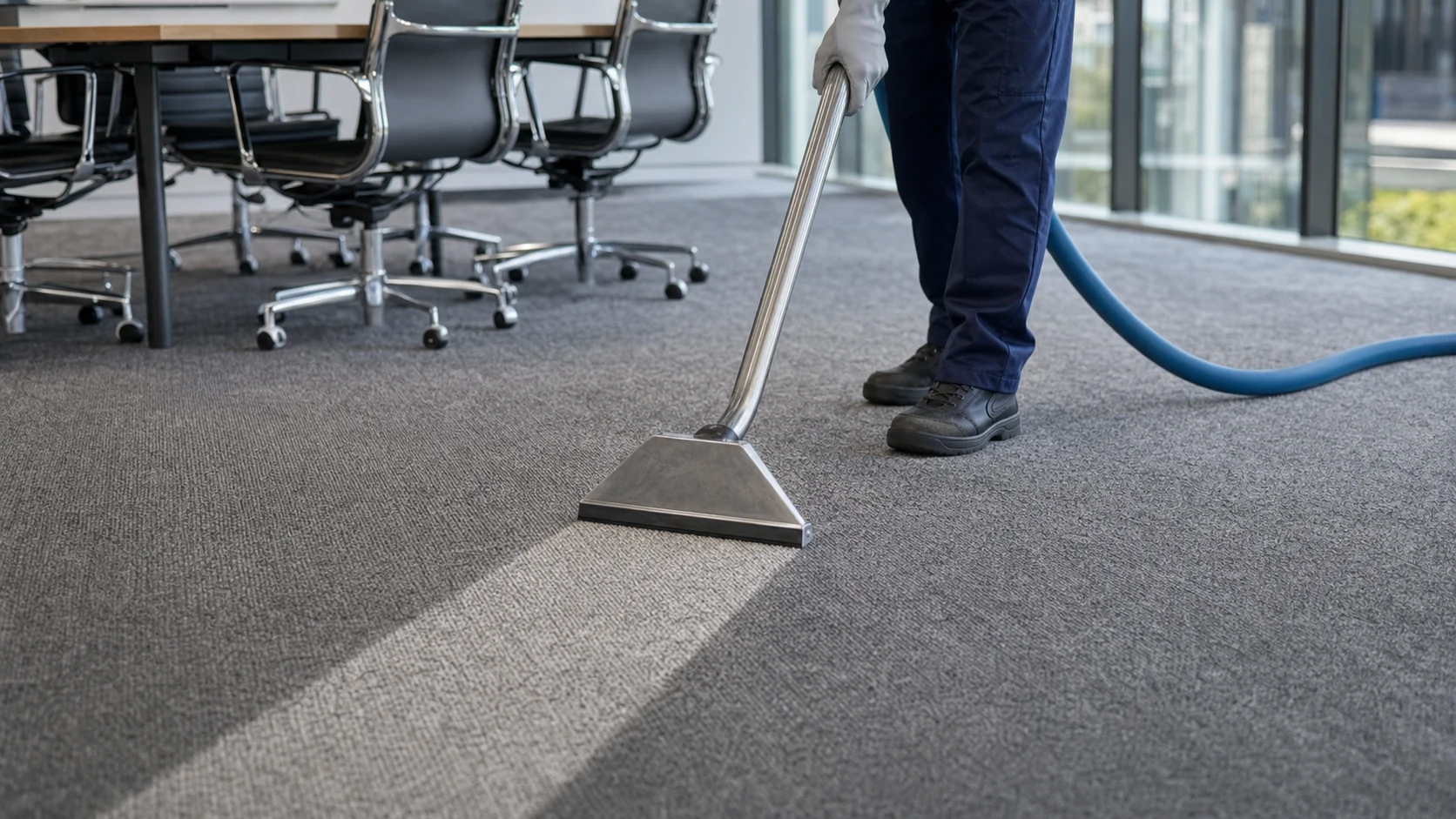
Detail cleaning means the whole surface rather than the visible part of it. On a partition that means both faces, the top edge and the base rail. On a desk it means the underside of the edge and the legs. On a door it means the frame, the hinge side, the top edge and the kick plate. That is a large increase in time, which is exactly why it belongs on a cycle rather than in a routine visit.

Being specific about which surfaces are detailed on which cycle turns the phrase into a plan. It also makes the cost visible. A building that wants everything detailed monthly is describing a substantially different agreement from one detailing on a quarterly rotation, and the difference should be a conscious choice rather than something discovered when the invoice arrives. A cycle also makes the work schedulable, which an undefined phrase never is.

The other phrases worth defining at the same time

Several terms cause the same problem. Sanitise implies a measurable outcome and should name the product and contact time. Dust is meaningless without a height limit. Deep clean means whatever the reader hopes it means. Presentation standard is entirely subjective. Each of these can be fixed with a single clarifying phrase, and doing so takes far less time than resolving the disagreement later.

The test to apply is simple: could two people read this line and inspect the same surface with the same conclusion. If not, the line needs a surface, a method or a limit added. That test costs nothing at the drafting stage and removes almost every quality dispute that otherwise arises from a document both parties signed in good faith. It is the cheapest quality control available to either party.

Defining terms in a Penrith cleaning scope

  • Spot clean written as a check plus a limited response
  • Named surfaces attached to every spot clean instruction
  • A stated limit where a finish cannot be cleaned
  • Detail clean defined by full coverage including edges and undersides
  • A cycle attached to each detailed surface
  • Sanitise, dust and deep clean each given a specific meaning
Clean Best completing scheduled periodic carpet cleaning in Sydney

Working in Penrith and the Outer Western Sydney

Penrith in Outer Western Sydney holds healthcare, education, retail, government and commercial offices, many of them large publicly accessed buildings where the cleaning arrangement is documented, tendered and inspected rather than agreed informally. In that environment an ambiguous term does not stay ambiguous for long; it becomes a dispute at an inspection or a performance review. Writing the definitions into the scope is therefore worth more here than in a small tenancy. Clean Best services Penrith from Seven Hills and defines its terms against specific surfaces in the written proposal.

Questions about Penrith

What should spot clean actually mean?

An inspection on every visit plus removal of visible marks from a named surface where the finish allows. Both halves matter. The inspection is the obligation, the removal is conditional, and the limit is stated because some marks on some paint finishes cannot be removed without making the surface look worse. Written that way, an inspector and a cleaner reach the same conclusion.

Why can wall marks not always be removed?

Flat and low-sheen paints mark easily and clean poorly. Rubbing a scuff often burnishes the surface into a shinier patch that is more noticeable than the original mark. Saying that in the scope avoids an unwinnable expectation and points the conversation towards touch-up painting, which is the genuine remedy. The limit is recorded against the surface rather than argued at an inspection.

How is detail clean different?

It covers the whole surface rather than the visible part: both faces of a partition, the underside of a desk edge, a door's frame, hinge side, top edge and kick plate. That is a large increase in time, which is why it belongs on a stated cycle rather than being implied within a routine visit.

Which other words cause problems?

Sanitise, dust, deep clean and presentation standard are the usual offenders. Sanitise should name a product and contact time. Dust needs a height limit. Deep clean needs a task list. Presentation standard needs a described outcome. Each is fixed with one clarifying phrase at the drafting stage. Each of them is settled once and then stops causing trouble.

Is there a quick test for an ambiguous line?

Ask whether two people could read the line, inspect the same surface and reach the same conclusion. Where they could not, something is missing: a named surface, a stated method or an honest limit. Applying that test while drafting removes almost every quality dispute that otherwise arises from a document both parties signed in good faith.

Get a fixed written quote for Penrith

Free walkthrough, scope in writing, price back within 24 hours.

Request a quote
Call nowEmail us