
Smithfield NSW 2164

Sanitation crews and contract cleaning in a Smithfield food plant

A food production site runs two cleaning functions that must not be confused. Production sanitation is part of the food safety system. Commercial cleaning covers everything around it. Mixing them creates a compliance problem rather than a saving. Writing the boundary down is the practical safeguard.

In short

Commercial cleaning at a Smithfield plant covers the ancillary areas: offices, meeting rooms, amenities, crib rooms, corridors outside production, external walkways, waste points and the change room approach where it sits outside the controlled zone. External bin areas and the approach paths to them are included where the site is not treating them as part of the controlled zone.

Production areas, equipment, food-contact surfaces, wash-down and anything inside the food safety plan belong to the site's sanitation function, with its own chemicals, verification and records. Clean Best names that boundary in the fixed written proposal so no part of the plan depends on a general cleaning agreement.

Why production sanitation cannot be outsourced casually

Sanitation in a food plant is a documented process. It specifies chemicals, concentrations, contact times, sequence, rinse requirements, verification by swab or ATP testing, and record keeping that an auditor will examine. It is written into the site's food safety plan and its effectiveness is the site's legal responsibility. That is a system, not a task list, and it cannot be handed to a general provider as an appendix to an office scope.

The people performing it also need training specific to that plan, including allergen management, chemical handling in a food environment and an understanding of what a failure looks like. A commercial cleaner without that training working in a production area is a hazard to the product rather than a help, regardless of how competently they clean an office. That is a product risk rather than a cleaning quality risk, which is why the exclusion is absolute.
The ancillary areas still matter

Everything outside the production zone contributes to the site's overall hygiene picture. Change rooms, amenities, crib rooms, corridors and external areas are where pests are attracted, where contamination is carried from and where an auditor forms an early impression. Doing those consistently and to a documented standard is a real contribution and it is exactly what a commercial provider is equipped to deliver.

The transition points deserve particular attention. The approach to a change room, the corridor outside a production door, the boot wash surround and the path from the crib room are the places where material moves toward the controlled zone. Naming them specifically, with a method suited to the risk, is more useful than treating them as ordinary corridors. It also gives the site a defensible answer about how contamination pathways are managed outside production.

Keeping the boundary visible to an auditor

An auditor asking who cleans a particular surface needs a definite answer, and the most common failure is a shrug. A scope that lists ancillary areas by name and states clearly that production and food-contact surfaces sit under the site's own sanitation plan gives both parties a clean answer. It also prevents the reverse problem, where a site assumes a contractor is covering something inside the plan.

Waste is worth naming in the same terms. General and recyclable waste from ancillary areas can be handled commercially. Production waste, rejected product, allergen-containing material and anything within the food safety plan's disposal requirements stay with the site. The two streams should never be combined by anybody, including with the best of intentions. Combining them once is enough to create a finding that takes considerable effort to close out.

Boundary items for a Smithfield food plant

  • Ancillary areas listed by name in the commercial scope
  • Production and food-contact surfaces excluded entirely
  • Transition points named with a method suited to the risk
  • Waste streams separated between commercial and production
  • A clear answer available for any auditor question about a surface
  • No part of the food safety plan resting on the cleaning agreement
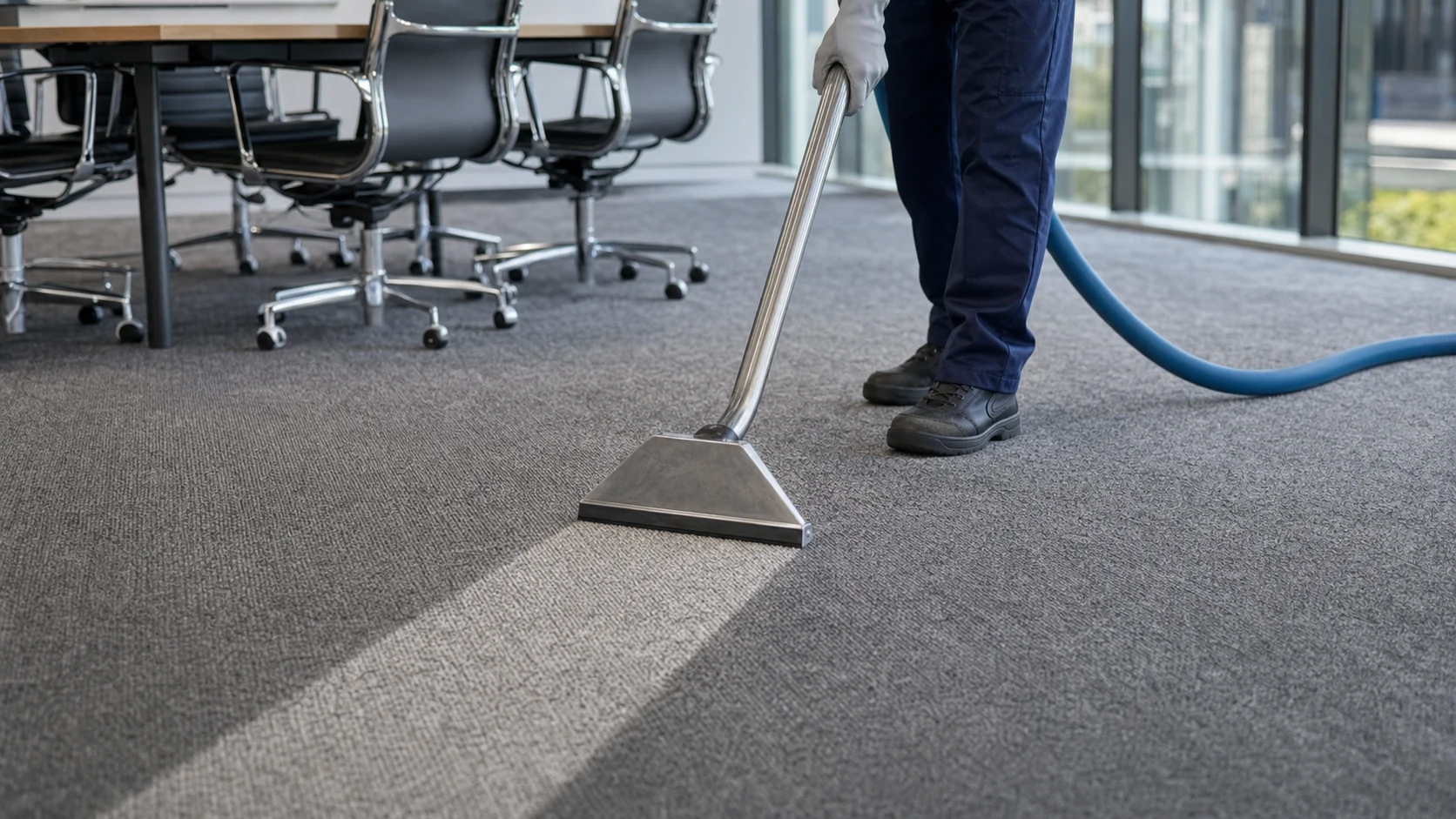
Clean Best completing scheduled periodic carpet cleaning in Sydney

Working in Smithfield and the Western Sydney

Smithfield in Western Sydney holds large industrial estates, food production, warehousing and trade businesses, with a significant concentration of manufacturing and processing operating under documented food safety systems. Plants there typically run their own sanitation shift alongside commercial cleaning of the office and amenity areas, sometimes in the same building at overlapping hours. That proximity is exactly why the boundary needs recording rather than assuming. Clean Best services Smithfield from Seven Hills and names the ancillary areas at the walkthrough.

Questions about Smithfield

Can a commercial cleaner take on production sanitation?

Not as an extension of an office scope. Sanitation is a documented process with specified chemicals, contact times, verification and records forming part of the site's food safety plan, and the people performing it need training specific to that plan. It is a system rather than a task list and stays with the site's own function.

What does the commercial scope actually cover?

The ancillary areas: offices, meeting rooms, amenities, crib rooms, corridors outside production, external walkways and waste points. Those areas affect pest attraction, contamination carried toward the controlled zone and the impression an auditor forms, so doing them consistently is a genuine contribution to the site's hygiene picture. None of it forms part of the food safety plan itself.

Which areas need particular attention?

The transition points: the approach to a change room, the corridor outside a production door, the boot wash surround and the path from the crib room. Material moves toward the controlled zone through those places, so they warrant a method suited to that risk rather than being treated as ordinary corridors. Each is named in the scope by location.

How is waste handled between the two functions?

General and recyclable waste from ancillary areas is handled commercially. Production waste, rejected product, allergen-containing material and anything covered by the food safety plan's disposal requirements stay with the site. The two streams are never combined, and the exclusion is written rather than left to judgement on a night shift. The waste points for each are also physically separated where the site allows.

What should we be able to tell an auditor?

Exactly who cleans each surface. A scope listing ancillary areas by name, and stating that production and food-contact surfaces sit under the site's own sanitation plan, provides that answer immediately. The common failure is a surface where neither party can say with certainty who is responsible. That certainty is the point of writing the boundary down.

Get a fixed written quote for Smithfield

Free walkthrough, scope in writing, price back within 24 hours.

Request a quote
Call nowEmail us