
Zetland NSW 2017

New-build finishes and manufacturer care in a Zetland development

A new building arrives with instructions. Manufacturers specify how their finishes must be cleaned, and warranties often depend on it. A cleaning scope written without those instructions can void cover on surfaces that are only months old. Building the scope from the finishes schedule avoids that entirely.

In short

In a new development the scope should be built from the finishes schedule and the manufacturer care instructions, not from a standard task list. Stone, engineered surfaces, timber, powder-coated metal, sealed concrete and specialist floor coverings each come with a specified method. Lobby joinery and lift interiors usually have their own instructions too.

Following those instructions is both a warranty issue and a practical one. Clean Best records the finishes and their required methods in the fixed written proposal, and excludes anything the manufacturer reserves to a specialist so the building's cover is not affected. That exclusion is named rather than implied.

Where the care instructions actually live

In a new building the information exists but is rarely in the hands of the person arranging cleaning. It sits in the operation and maintenance manuals handed over at completion, in the finishes schedule, or with the builder. Getting a copy of the relevant sections before the scope is written is a short task that prevents a whole category of avoidable damage.

Owners corporations and building managers who receive those manuals often do not connect them to the cleaning arrangement, and cleaning providers rarely ask. The result is a building with documented care requirements and a scope that uses generic products, which usually shows up two or three years later as premature wear that nobody can explain. Asking for those documents at the start of an arrangement is a short conversation with a long benefit.
The finishes that most often go wrong

Natural and engineered stone is the common one, because acidic and abrasive products etch it and many general cleaners are one or the other. Powder-coated metal in entries and balustrades needs a neutral product and no solvents. Timber veneer joinery marks with excess moisture. Anodised aluminium is sensitive to alkaline cleaners. Each is a straightforward requirement once it is written down. Recording the product against the surface is what makes the requirement survive a change of cleaner.

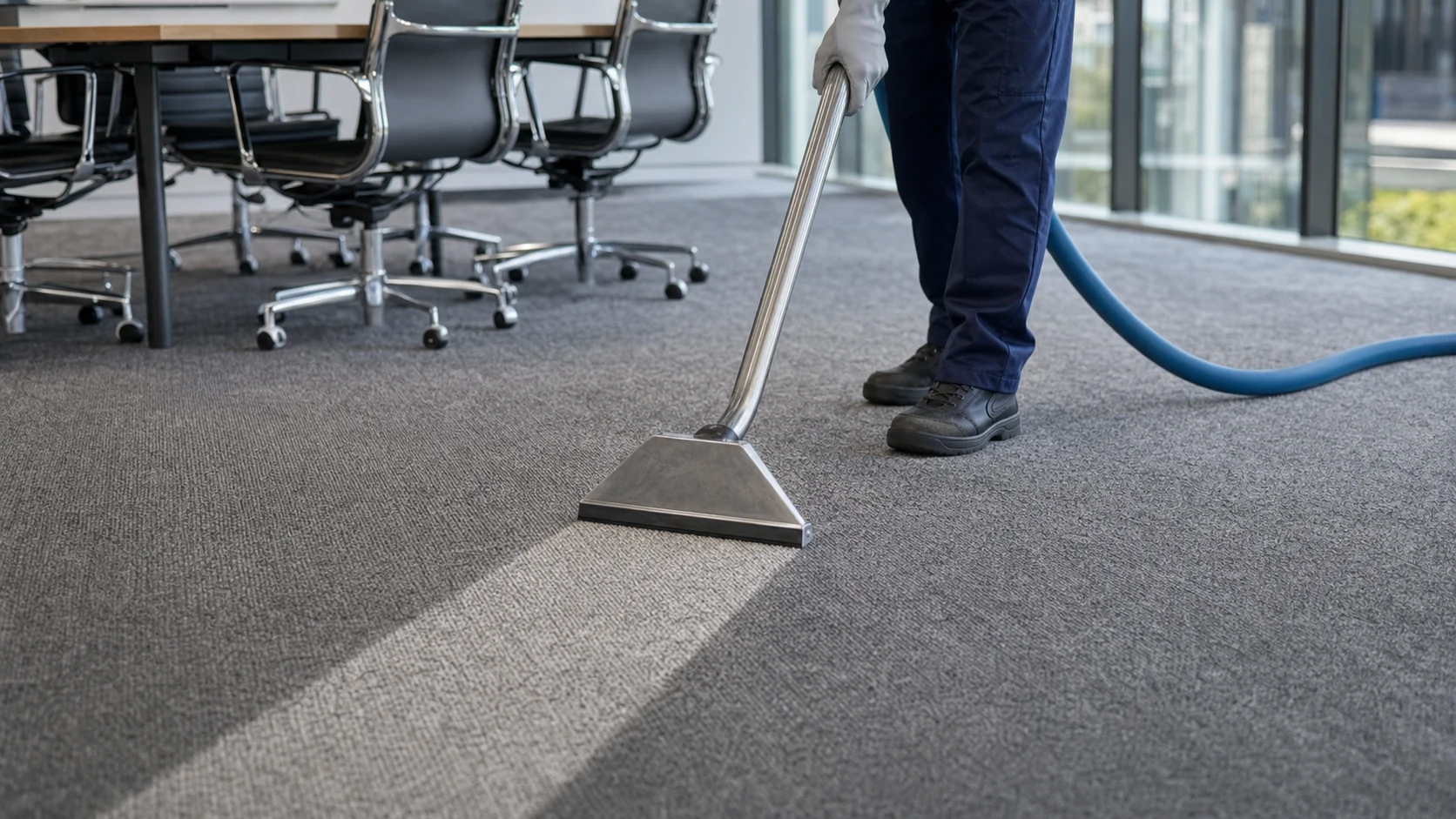
Floor coverings carry the most consequence because of their area. Vinyl, rubber, engineered timber, polished concrete and specialist tiles all have specified maintenance regimes, and several of them explicitly exclude particular treatments. Using a stripper on a floor that was never intended for one, or a pad grade too aggressive for a coating, causes damage that is expensive and immediate. Those regimes are written into the scope rather than summarised.

Defects, warranties and the first two years

During a defects liability period, damage to a finish becomes a question about whether it was a defect or a result of maintenance. A building that can show its cleaning followed the specified methods is in a far stronger position than one that cannot. That is a genuine reason to have the products and methods written into the scope rather than left to whoever attends. Where a builder is still responsible for a surface, that position is far easier to hold with a record of what was used on it.

It is also worth recording condition at handover. New buildings arrive with marks, and distinguishing those from anything that happens afterwards protects both the cleaning provider and the owner. A short photographic record at the start of the arrangement costs almost nothing and settles most disputes about a surface before they develop. It also gives the committee a baseline for the defects process.

New-build finish items for a Zetland development

  • Finishes schedule and care instructions obtained before scoping
  • Product and method recorded against each finish type
  • Acidic and abrasive products excluded on stone by name
  • Floor covering maintenance regimes followed as specified
  • Anything reserved to a specialist excluded from the scope
  • Condition at handover recorded, with photographs
Clean Best completing scheduled periodic carpet cleaning in Sydney

Working in Zetland and the Inner South

Zetland in the Inner South is dominated by new mixed-use developments, retail and apartment common areas, with buildings completed recently enough that finishes schedules, defects liability periods and manufacturer warranties are all still live. Common areas in those developments typically feature stone, engineered surfaces, powder-coated metal and specialist floor coverings chosen for appearance rather than for ease of maintenance. Clean Best services Zetland from Seven Hills and builds the scope from the finishes schedule where it is available.

Questions about Zetland

Where do we find the care instructions for our finishes?

In the operation and maintenance manuals handed over at completion, in the finishes schedule, or with the builder. Owners corporations and building managers often hold them without connecting them to the cleaning arrangement. Obtaining the relevant sections before the scope is written prevents a whole category of avoidable damage. The building manager usually holds them already.

Which finishes are most often damaged?

Natural and engineered stone, because acidic and abrasive products etch it. Powder-coated metal needs a neutral product and no solvents, timber veneer marks with excess moisture, and anodised aluminium reacts to alkaline cleaners. Floor coverings carry the most consequence simply because of the area involved. Each is recorded with its required method in the scope.

Can using the wrong product affect a warranty?

It can. Many manufacturers specify a maintenance regime as a condition of cover, and several explicitly exclude particular treatments. A building that can show its cleaning followed the specified methods is in a far stronger position during a warranty or defect discussion than one relying on a generic task list. The documentation costs nothing to keep and matters when it is needed.

Should condition be recorded at handover?

Yes. New buildings arrive with marks, and distinguishing those from anything that happens afterwards protects both the owner and the cleaning provider. A short photographic record at the start of the arrangement costs very little and settles most disputes about a surface before they have a chance to develop. It also supports the owners corporation during the defects period.

What if a manufacturer reserves maintenance to a specialist?

Then that work is excluded from the cleaning scope and referred, so the building's cover is not affected. Some floor coatings and specialist surfaces are maintained only by an approved applicator. Recording that exclusion by name means nobody attempts it with a general method and discovers the consequence later. The approved applicator is named where the building knows it.

Get a fixed written quote for Zetland

Free walkthrough, scope in writing, price back within 24 hours.

Request a quote
Call nowEmail us