
Castle Hill NSW 2154

What gets moved and what does not in a Castle Hill suite clean

Almost every complaint about dust under a desk or marks behind a cabinet comes back to one unwritten rule: cleaners work around furniture, not through it. Deciding what may be moved in a Castle Hill suite changes what the room can look like.

In short

The default on a standard scope is that furniture stays where it is. Chairs may be moved and replaced, light bins and mats shifted, and open floor cleaned. Desks, cabinets, treatment equipment, shelving, display units and anything carrying cables, stock or equipment are worked around rather than lifted.

That default exists because moving furniture risks damage to the item, the floor and the person moving it, and because equipment often has to stay where it is calibrated or connected. Clean Best records any agreed exception in the fixed written proposal, along with who is responsible for putting things back.

The cost of moving things is rarely the lifting

A filing cabinet dragged across vinyl leaves a mark that outlasts the clean. A desk shifted to reach the floor pulls a network cable out of a socket that nobody notices until the morning. A treatment chair moved a few centimetres no longer lines up with the power outlet it needs. None of these are heavy items in themselves; the problem is that the consequence lands on somebody else the next day.

There is also the question of what is inside. Cabinets holding records, retail display units carrying stock and shelving with equipment all become unstable when moved, and the person moving them cannot see the load. Working around is not a lesser service, it is the arrangement that avoids converting a cleaning visit into a damage conversation. It just needs to be stated so the result is not a surprise.
What can be agreed as an exception

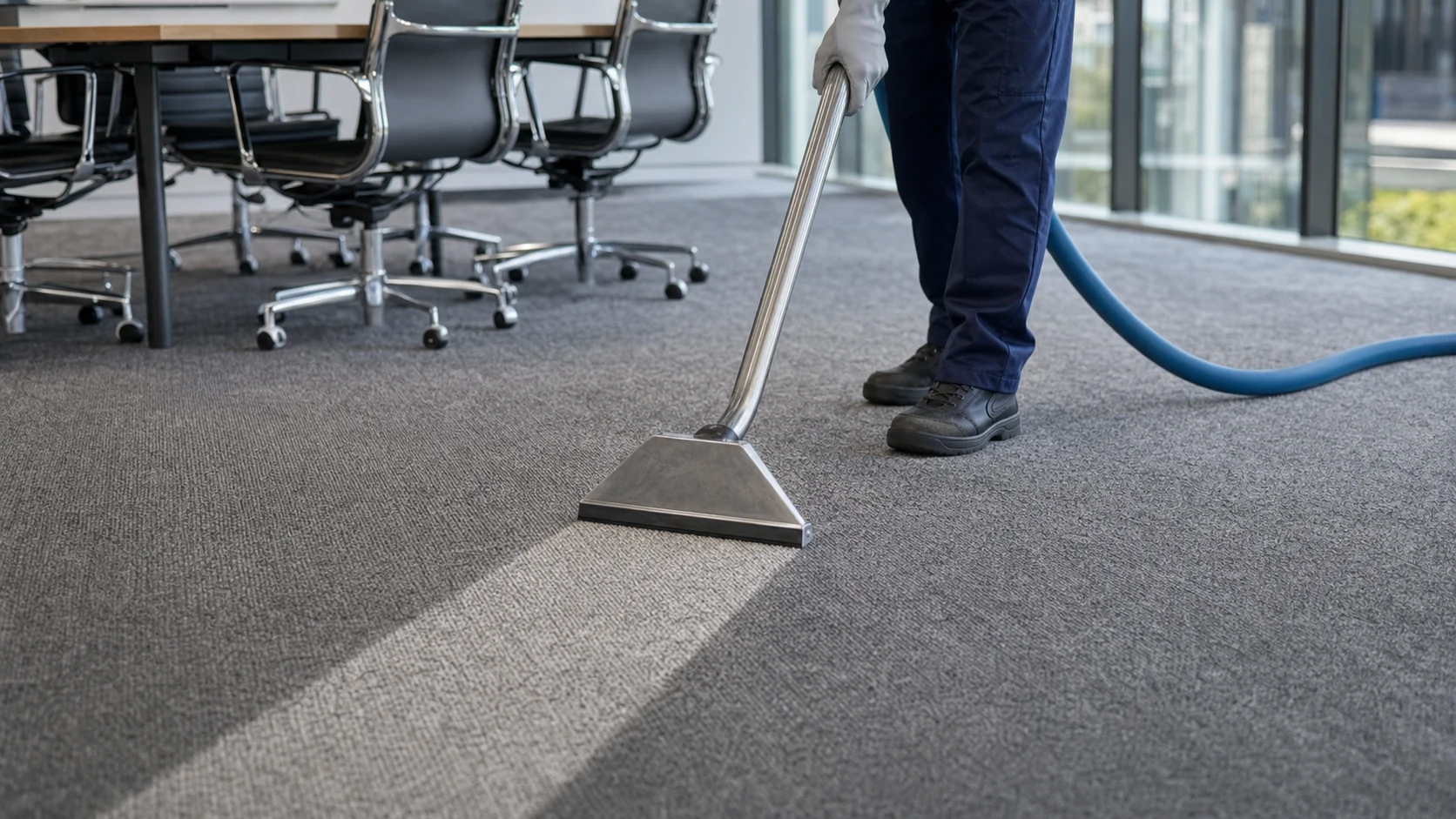
Plenty of exceptions are reasonable. Chairs are routinely moved and returned. Waste bins, floor mats, freestanding signage and light side tables can be shifted. In a suite where a particular area needs periodic attention, a scheduled clean with the room cleared by the practice beforehand gets a far better result than anyone attempting it around obstacles during a routine visit. Each exception is written by name rather than left as a general permission.

The important part of any exception is the return. If a scope allows an item to be moved, it should say who puts it back and to what position. In a clinical or retail environment where layout matters, marking the floor or photographing the arrangement is a small step that removes the argument entirely. Otherwise the item drifts a little each time and eventually somebody notices.

Getting the hidden areas done without moving anything

Most of what people want from moving furniture can be achieved another way. Extension tools reach under low furniture, a periodic detail item can cover skirtings and edges properly, and a scheduled attendance after a practice has cleared a room deals with the rest. Planning it that way puts the work at a time when it can be done properly rather than squeezed into a visit built for something else.

The alternative is the pattern most suites fall into, where the area behind the reception desk or under the storage bench is never quite reached and slowly becomes the thing everyone notices. Naming those areas as periodic items, with a stated condition that the space is cleared first, turns an ongoing irritation into a task with a date attached. It also gives the practice a reason to clear the space, which nobody does without a booking.

Access and furniture rules for a Castle Hill suite

  • A stated default that furniture is worked around, not moved
  • Which light items may be moved and returned
  • Named exceptions where equipment must not be touched at all
  • Who returns moved items and to what position
  • Periodic detail items for edges and behind fixed furniture
  • Which areas the site clears in advance for a scheduled clean
Clean Best completing scheduled periodic carpet cleaning in Sydney

Working in Castle Hill and the Hills District

Castle Hill in the Hills District has shopping centres, offices, schools and medical suites, with a large share of tenancies fitted out as consulting rooms, allied health practices and professional suites. Those fit-outs tend to be dense, with equipment positioned for power and data rather than for access, and with joinery built in rather than freestanding. That combination makes the moving question unusually important, because so little of the floor is genuinely open. Clean Best services Castle Hill from Seven Hills and records furniture and equipment exclusions when the scope is written.

Questions about Castle Hill

Will cleaners move desks to vacuum underneath?

No. Desks carry cabling, equipment and sometimes calibrated devices, and moving them risks disconnection or damage that shows up the next morning. Accessible floor around and under the desk is reached with the right tools. Where full coverage matters, the practical answer is a scheduled clean with the area cleared beforehand. That approach also protects the cabling, which is usually the real risk.

Are chairs moved and put back?

Yes, that is normal in routine work. Chairs, waste bins, floor mats and light freestanding items can be shifted and returned. The distinction is weight, contents and connection: anything holding stock, records, cabling or equipment stays put. That distinction is written into the scope so it does not vary between cleaners. Anything unclear is resolved at the walkthrough rather than during a shift.

How do we get the area behind the reception desk cleaned?

As a periodic item with the space cleared first. Trying to reach it around obstacles during a routine visit produces a partial result and risks pulling cabling. Naming it, setting a cycle and agreeing that the practice clears it beforehand turns a permanently neglected corner into a task with a date attached.

What if something gets moved and not put back correctly?

That is why the scope should name who returns items and to what position. In rooms where layout matters, marking positions on the floor or keeping a photograph removes the ambiguity. It is a small step that prevents the slow drift where a piece of equipment ends up in a slightly different place every week.

Can equipment in a treatment room be excluded entirely?

Yes, and it often should be. Devices that are calibrated, connected or clinically sensitive can be named as items that cleaners do not touch at all, including their surfaces. The surrounding area is still cleaned. Recording the exclusion by name is more reliable than a general instruction to be careful with equipment.

Get a fixed written quote for Castle Hill

Free walkthrough, scope in writing, price back within 24 hours.

Request a quote
Call nowEmail us