
Ingleburn NSW 2565

Production plant, guarding and isolation in an Ingleburn factory

In a manufacturing building the cleanest possible answer about machinery is also the safest one. A cleaning provider does not isolate plant, does not open guarding and does not work inside a machine, and no request changes that. What can be done around it is still substantial.

In short

A standard scope in an Ingleburn factory covers office and administration areas, amenities, crib rooms, meeting rooms, pedestrian walkways, accessible floor in production areas and general waste. It covers the floor around machinery to the extent it can be reached safely. Guard rails and pedestrian barriers are included as touch surfaces.

It excludes machine surfaces, guarding interiors, conveyors, control panels, extraction hoods on plant and anything requiring isolation or lockout. Those are maintenance activities under the site's own procedures. Clean Best names the exclusion in the fixed written proposal rather than relying on a cleaner's judgement on the night.

Isolation is the reason, not caution

Machinery is safe to work on when it has been isolated, locked out, tagged and verified by someone authorised to do it. That process belongs to the site and to maintenance, and it exists precisely because stored energy, automatic starts and residual movement are not visible from outside. A cleaner has no way to establish that a machine is safe, and no authority to make it so, which puts machine cleaning outside the scope by definition.

The same reasoning covers guarding. A guard is an engineered control, and opening it to reach a surface behind it defeats the control for the duration. Anyone who has been trained on the equipment knows the sequence for doing that safely; a cleaning provider has not been. So the rule is simple and absolute: nothing behind a guard, nothing inside a machine, nothing that requires a panel to be opened.
What can be done around plant

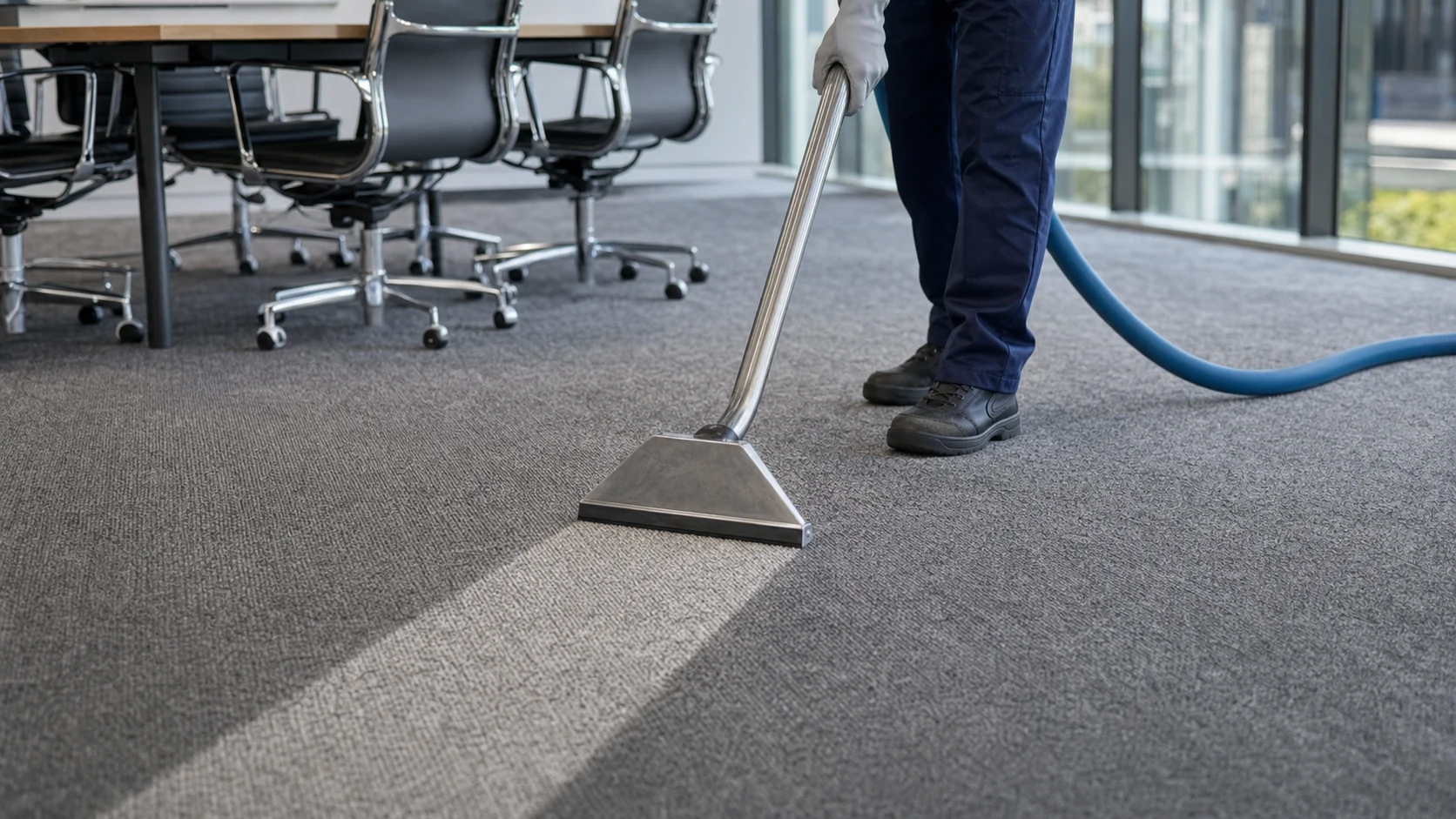
There is still substantial work available around machinery. Floors in walkways and between machines can be swept and scrubbed where access allows, spillage on the floor can be cleared, guard rails and pedestrian barriers can be wiped, and waste can be collected. Line markings and walkway definition stay visible because the floor is maintained, which is a genuine safety contribution rather than a cosmetic one.

The limit is proximity. Where a machine is running, the area beside it is not a place for someone to be working at floor level, and the scope should state that cleaning occurs when the line is stopped or when the area is accessible. On a site running continuously, that means agreeing which zones are available at which times, which is an operations decision rather than something a cleaner negotiates on arrival.

Process residue and the waste it becomes

Manufacturing produces residue that is specific to the process: swarf, dust from a particular material, offcuts, coolant, oils and packaging. Some of it is ordinary waste, some is regulated, and a cleaning provider is not positioned to tell the difference by looking. The scope should identify which material streams are within the cleaning task and which are handled by the site under its own waste arrangements.

Where residue is combustible, respirable or chemically active, cleaning it introduces its own hazards, including the risk of creating an airborne dust cloud with the wrong equipment. Those materials need a method chosen for the substance and often specialised extraction. Naming them as excluded, and referring them to whoever handles the site's process waste, avoids a well-intentioned sweep creating a hazard the site had already controlled.

Plant boundaries for an Ingleburn factory

  • Machine surfaces, guarding and panels excluded absolutely
  • Isolation and lockout named as a maintenance activity
  • Floor coverage described against machine access and running state
  • Which zones are available for cleaning and when
  • Process residue streams identified as included or excluded
  • Combustible or respirable material referred to the site's own arrangement
Clean Best completing scheduled periodic carpet cleaning in Sydney

Working in Ingleburn and the Macarthur

Ingleburn in the Macarthur region is built around industrial estates, manufacturing, warehousing and local retail, with a long-established manufacturing base operating in buildings that combine production floors, storage and small office areas under one roof. Sites of that kind run their own maintenance and isolation procedures, so the cleaning boundary aligns naturally with controls the site already has in place. What is often missing is the written statement of where the cleaning task stops. Clean Best services Ingleburn from Seven Hills and records the machinery exclusion and available zones during the walkthrough.

Questions about Ingleburn

Can cleaners wipe down the machines during a shutdown?

Not as part of a standard scope. Even during a shutdown, establishing that a machine is safe requires isolation, lockout and verification by someone authorised on that equipment. A cleaning provider has neither the authority nor the training for it. Machine cleaning stays with the site's maintenance team or the equipment provider.

What about the floor between machines?

That is included where it can be reached safely and where the line is stopped or the area is accessible. Keeping those floors clear and the line markings visible is a real safety contribution. On a continuously running site, which zones are available at which times is agreed in advance rather than negotiated on arrival.

Who handles swarf, dust and process waste?

That depends on the material, which is why the streams are identified in the scope. Ordinary packaging and general waste can be a cleaning task. Regulated, combustible or respirable material is handled by the site under its own waste and hygiene arrangements, because sweeping it with the wrong equipment can create a hazard rather than remove one.

Is anything behind a machine guard ever cleaned by the contractor?

No. A guard is an engineered control, and opening it defeats that control. The people trained on the equipment know the sequence for doing it safely; a cleaning provider does not. The rule is absolute and stated in writing rather than left to be judged by whoever is on site that evening.

Does the exclusion mean the machines never get cleaned?

No. It means responsibility for that work sits with someone else. The useful version of the exclusion also records who is responsible, whether that is the maintenance team, production staff on a shift routine, or the equipment supplier under a service agreement. That turns the boundary into an allocation rather than a gap.

Get a fixed written quote for Ingleburn

Free walkthrough, scope in writing, price back within 24 hours.

Request a quote
Call nowEmail us