
Matraville NSW 2036

Unknown substances and the stop-and-report rule in Matraville

Most of a cleaning scope describes what will be done. One line needs to describe what will not, and it is the one covering a substance nobody can identify. On an industrial site that line protects everybody. It is the shortest line in the document and the most important.

In short

The rule is simple and absolute: if a cleaner cannot identify a substance, they do not touch it. The area is isolated where that is safe, the site contact is notified immediately, and the material stays where it is until someone who can identify it decides what happens next.

This is not caution for its own sake. The wrong product on an unknown chemical can generate heat, gas or a reaction, and absorbing a regulated material into a general waste bin creates a compliance breach. Clean Best writes the stop-and-report rule into the fixed written proposal for every industrial site.

Why identification has to come before any action

Cleaning products are chemicals. Mixing an unknown substance with an acid, a chlorine-based product or a strong alkali can produce a reaction, and the person doing it is standing directly over it. A liquid on a floor might be water, coolant, a process chemical, a decanted solvent or something spilled from a container somebody moved. Nothing about its appearance reliably distinguishes those cases.

The site is the only party that can answer the question, because it holds the safety data sheets, the manifest and the knowledge of what is used where. That is why the rule routes the decision back to the site rather than asking a cleaner to make a reasonable guess. A reasonable guess is exactly what the controls around hazardous materials exist to prevent. A cleaner following the rule is not being unhelpful; they are applying the same control the site applies to its own staff, which is the outcome any responsible operator would want.
What isolate and report actually means on the ground

Isolating means preventing anyone walking through it: a cone, a sign, a closed door or simply staying present until someone arrives, depending on the location. It does not mean containing the spill with absorbent, because applying anything to an unknown substance is itself an action with consequences. If a cleaner cannot isolate the area safely, the correct step is to withdraw and call from a safe distance.

Reporting means contacting a named person immediately rather than noting it for the end of shift. On a site running outside business hours, that contact has to be someone reachable at the time, which is a detail worth resolving when the scope is written. A rule that routes a night-time discovery to an office mailbox is not a working rule, it is a formality.

Building the arrangement into the scope properly

The scope should record three things: the stop-and-report rule itself, the after-hours contact, and the site's expectation about who cleans up once the substance is identified. Sometimes that will be the site's own team using its spill procedure, sometimes a licensed contractor. Occasionally, once identified as harmless, it comes back to the cleaning team as ordinary work, and that path should exist too.

It is also worth recording what the cleaning provider does have on hand. Knowing whether spill kits are available, where they are and what they are rated for tells everyone what is possible before a decision is made. That preparation converts a rule that sounds like a refusal into a process that actually resolves the situation quickly. It also tells the site whether it needs to improve its own provisions before an incident occurs.

Unknown substance handling at a Matraville site

  • A written stop-and-report rule for unidentified material
  • Isolation described without applying absorbent or product
  • A named contact reachable at the hours cleaning occurs
  • Who cleans up once the substance is identified
  • Location and rating of the site's spill equipment
  • A path back to routine cleaning where a substance proves harmless
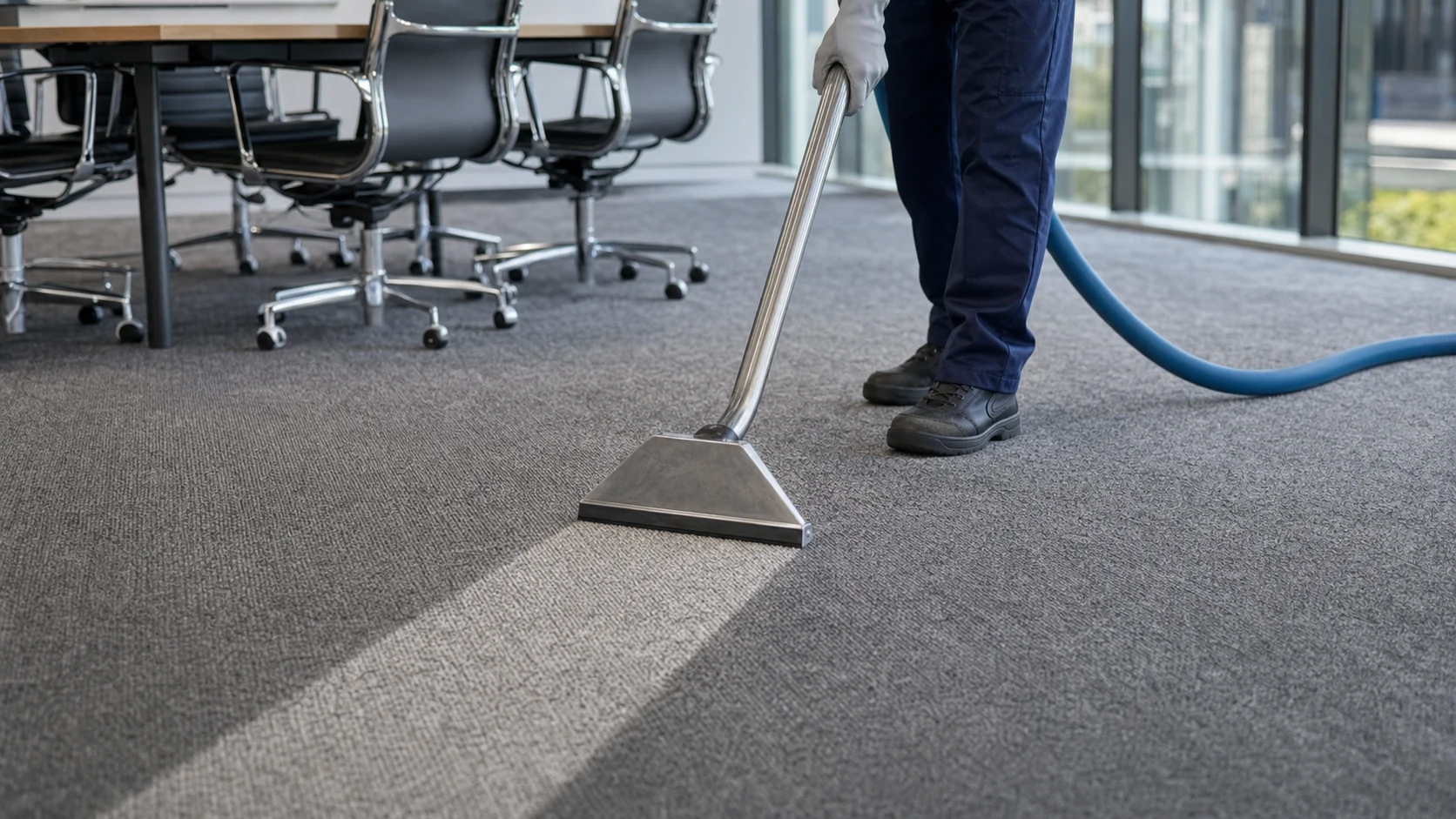
Clean Best completing scheduled periodic carpet cleaning in Sydney

Working in Matraville and the South Eastern Sydney

Matraville in South Eastern Sydney holds industrial facilities, logistics, local retail and offices, with an established industrial area where chemical storage, transport activity and manufacturing sit close to smaller commercial premises. Sites of that type typically hold safety data sheets and a spill procedure already, so the cleaning rule aligns with controls the business has in place rather than introducing something new. What is often missing is a contact reachable at cleaning hours. Clean Best services Matraville from Seven Hills and confirms that contact before any after-hours attendance begins.

Questions about Matraville

Why will a cleaner not just mop up a spill?

Because cleaning products are chemicals, and applying one to an unidentified substance can generate heat, gas or a reaction with the person standing over it. Appearance does not reliably distinguish water from coolant, solvent or a process chemical. The rule routes the decision to the party holding the safety data sheets and the site knowledge.

What does isolating the area involve?

Preventing anyone walking through it, using a cone, a sign, a closed door or simply staying present until someone arrives. It does not involve applying absorbent, because that is itself an action with consequences on an unknown material. Where the area cannot be isolated safely, the cleaner withdraws and calls from a safe distance.

Who do cleaners call outside business hours?

A named contact reachable at the hours cleaning occurs, which is a detail worth settling when the scope is written. A rule that routes a night-time discovery to an office mailbox is a formality rather than a working process. Resolving the contact in advance is what makes the rule useful when it is needed.

What happens after the substance is identified?

That depends on what it is. Sometimes the site's own team handles it using its spill procedure, sometimes a licensed contractor is required, and occasionally it proves harmless and comes back to the cleaning team as ordinary work. All three paths are worth recording so the situation resolves quickly rather than stalling.

Does this rule apply to a small spill as well?

It applies to any substance that cannot be identified, regardless of size. Volume does not determine hazard, and a small quantity of a concentrated material can be more dangerous than a large quantity of something harmless. Applying the rule consistently is what makes it reliable rather than a judgement made under time pressure.

Get a fixed written quote for Matraville

Free walkthrough, scope in writing, price back within 24 hours.

Request a quote
Call nowEmail us