
St Marys NSW 2760

When a St Marys premises changes and the inclusion list does not

A scope describes a building at a moment. Buildings then change: a mezzanine goes in, a wall comes out, a second unit is leased, a new amenity appears. The document that governs the service has to change with them or it stops being true.

In short

Any change to the premises should trigger a review of the inclusion list. Added floor area, new rooms, a changed use, additional staff, a new tenancy or a reconfigured layout all affect what needs cleaning, how long it takes and which exclusions still apply. Storage changes count as well.

The alternative is a scope that quietly becomes wrong. Clean Best treats a premises change as a variation, describes the affected areas and confirms the revised arrangement in writing before it starts, so the document keeps matching the building it describes. The revised version replaces the earlier one rather than sitting beside it.

The changes that matter most

Added area is the obvious one, and it is usually raised. The changes that slip through are subtler: a storeroom converted to an office, a mezzanine added above an existing floor, a second amenity opened, an outdoor area enclosed, or a team of ten becoming a team of thirty in the same square metres. Each of those changes the workload without changing the floor plan in any way anybody thinks to mention.

Use changes have the largest effect of all. A space that becomes a food area, a training room, a customer-facing reception or a workshop needs a different task list, different products and often a different frequency. Continuing the previous scope in a room that now does something else is one of the most common reasons a service starts to look inadequate without anyone changing how they work. Catching a use change early is usually the single highest-value outcome of any scope review.
Exclusions expire too

Exclusions are as time-bound as inclusions. A room excluded because it held equipment may be empty now. An area excluded for access may have had a door installed. A surface excluded because another contractor covered it may have lost that arrangement when a lease changed. Each of those leaves a space that nobody is cleaning and nobody has noticed, which is worse than the original exclusion.

The reverse also happens. A site adds a restricted zone, installs plant, brings in a chemical store or introduces a security control, and an area that was previously in scope should now be excluded. Reviewing both directions when the premises changes is what keeps the list accurate rather than accumulating errors in one direction only. Errors accumulating in one direction only is how a scope drifts from generous to inadequate or the reverse.

Making review a habit rather than an event

The efficient approach is a short review at a set interval plus a trigger for significant change. The interval catches the gradual drift; the trigger catches the obvious event. Neither takes long: walking the changed areas with the current scope in hand usually resolves everything in under an hour, and the outcome is a written amendment rather than an accumulation of informal adjustments.

It is also the moment to check whether informal additions have crept in. Tasks absorbed over months without being priced show up here, and either they belong in the scope properly or they should stop. Doing that openly is far better than either party discovering it during a difficult conversation about cost or performance later. It also keeps the pricing honest for both parties over a long agreement.

Reviewing a scope after a St Marys premises change

  • Added or reconfigured areas walked with the current scope
  • Use changes identified even where the layout is unchanged
  • Occupancy increases treated as a workload change
  • Existing exclusions checked to see if they still apply
  • New restricted or plant areas added as exclusions
  • Informal additions either formalised or stopped
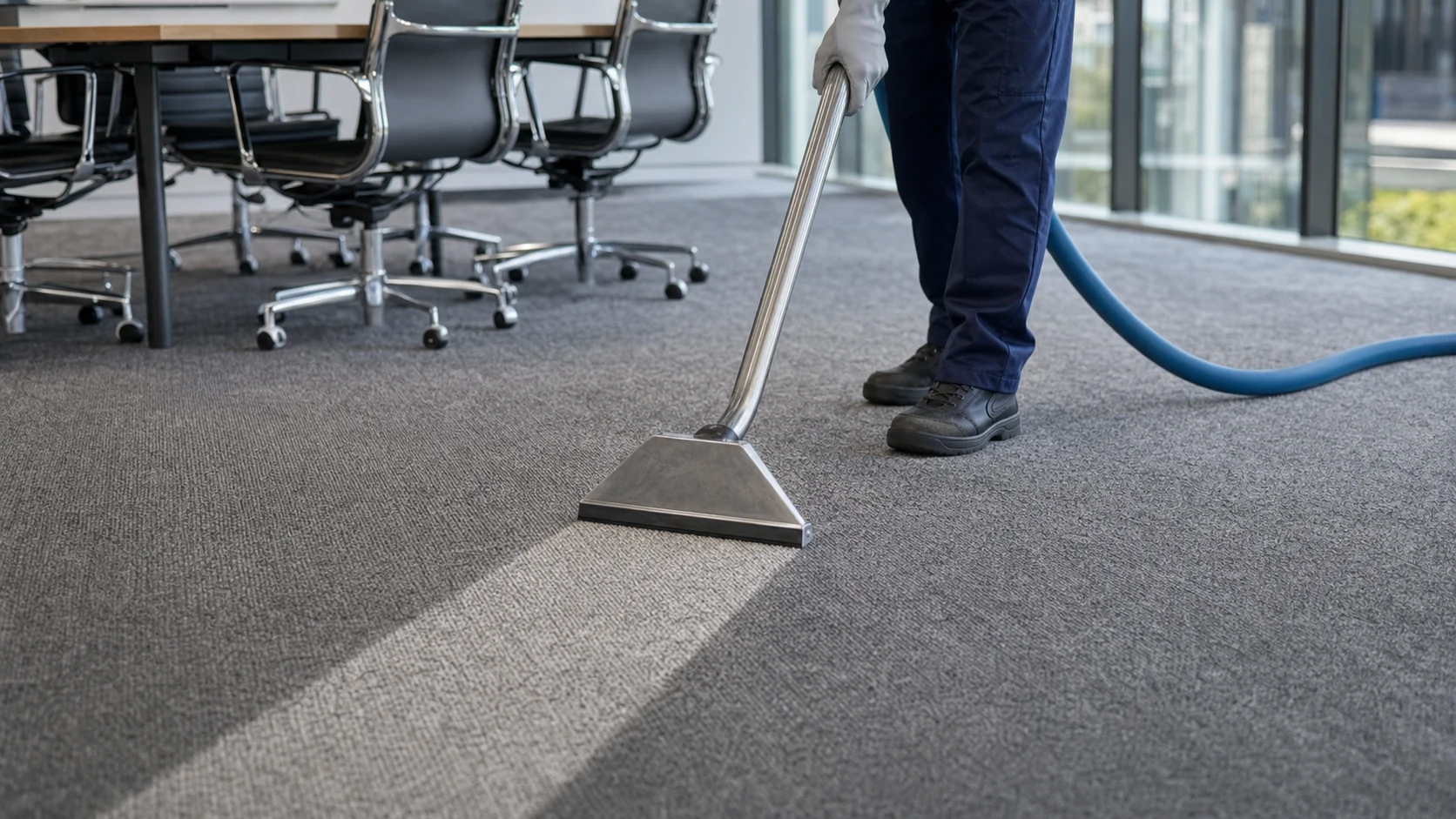
Clean Best completing scheduled periodic carpet cleaning in Sydney

Working in St Marys and the Outer Western Sydney

St Marys in Outer Western Sydney carries industrial, retail, offices and infrastructure-related businesses, with a mix of established premises and sites reconfigured to support ongoing infrastructure activity in the region. Businesses there frequently expand into adjoining units, add mezzanine space or change what a building is used for without altering its external footprint. Those are exactly the changes that outdate a cleaning scope invisibly. Clean Best services St Marys from Seven Hills and treats a premises change as a written variation.

Questions about St Marys

What kinds of change should trigger a scope review?

Added area, new rooms, a changed use for an existing space, a significant increase in occupancy, a new tenancy, or a reconfigured layout. The subtle ones matter most: a storeroom becoming an office or a team doubling in the same space changes the workload without changing anything visible on a floor plan.

Why does a change of use matter so much?

Because a room that becomes a food area, a training room, a reception or a workshop needs a different task list, different products and often a different frequency. Continuing the previous scope in a room that now does something else is one of the most common reasons a service begins to look inadequate.

Can an exclusion stop applying?

Yes, and it often does. A room excluded because it held equipment may be empty, an access exclusion may be resolved by a new door, and a surface covered by another contractor may lose that arrangement when a lease changes. The result is a space nobody cleans and nobody has noticed. Checking both directions at each review is what prevents that.

How often should the scope be reviewed?

A short review at a set interval plus a trigger for significant change works well. The interval catches gradual drift and the trigger catches obvious events. Walking the changed areas with the current scope in hand usually resolves everything in under an hour and results in a written amendment. The amendment replaces the previous version rather than being appended to it.

What about tasks that have crept in informally?

The review is the right moment to surface them. Tasks absorbed over months without being priced either belong in the scope properly or should stop. Handling that openly is far better than either party discovering it during a difficult conversation about cost or performance further down the track. Both outcomes are better than leaving the situation undiscussed.

Get a fixed written quote for St Marys

Free walkthrough, scope in writing, price back within 24 hours.

Request a quote
Call nowEmail us