
Artarmon NSW 2064

Workshop floors, benches and machinery in an Artarmon service premises

A workshop is the clearest example of a building where the cleanest-looking answer is the wrong one. Plenty of surfaces in an Artarmon service premises could be wiped, and several of them should not be, by anyone other than the people who operate them.

In short

A routine clean in an Artarmon workshop typically covers the office, the customer waiting area, amenities, the staff kitchen and the walking routes through the workshop. It generally excludes machinery, tool benches in use, parts washers, hoists, fluid containment and any surface where oil or coolant is part of normal operation.

Those exclusions are operational rather than commercial. Cleaning around live plant introduces risk to the cleaner and to the equipment, and residue handling can create a waste stream a general cleaning service is not set up for. Clean Best records the boundary at the walkthrough, and the fixed written proposal states which areas are covered.

The customer-facing half is straightforward

Reception, the waiting area, the counter, the amenities and the office are ordinary commercial cleaning. Floors are vacuumed or mopped, glass at hand height is cleaned, touchpoints are wiped, waste is emptied and the kitchen is left in a usable state. This is the part of an Artarmon service business most customers actually judge, and it is the part where a routine inclusion list behaves exactly as it would in any office.

The one addition worth naming is the transition zone. The doorway between the workshop and the waiting area carries oil, brake dust and swarf on shoes, and an ordinary detergent pass will smear rather than lift it. If that threshold matters, it needs its own method rather than being folded into general mopping, and the proposal should name it so a relief cleaner does not treat it like a hallway.
Why machinery and benches are excluded

Equipment cannot be wiped safely unless it is isolated, and isolation is the operator's decision, not a cleaner's. Guards, sensors, lubricated surfaces and electrical enclosures all behave badly with water and general-purpose product. A cleaner who wipes a control panel may remove a label, trip a sensor or introduce moisture where a service manual specifically excludes it. The exclusion protects the asset as much as the person.

Tool benches are excluded for a different reason. They hold the client's tools, fasteners, parts and work in progress, often mid-job. Clearing a bench loses the order somebody was working in, and moving a part can cost more than the whole cleaning visit. Cleaners wipe free bench edges where they exist and leave everything else, which is the outcome most workshop managers want once it is stated plainly.

What happens with oil, coolant and floor residue

Absorbent granules and a bunded spill kit are a workshop's own equipment, and using them is part of running the workshop rather than part of cleaning it. Routine work can include sweeping the walking lanes and removing loose debris. It does not include lifting embedded oil from concrete, servicing containment bunds or handling used absorbent, which becomes a regulated waste once it is contaminated.

Where a floor genuinely needs degreasing, it is a planned attendance with a suitable product, a cleared area and an agreed way to deal with the run-off. It is not something that can be added silently to a routine visit, because the wash water cannot simply go to the nearest drain. Any work touching that boundary is quoted separately and, where a licensed waste contractor is required, referred out. That referral is the correct outcome rather than an inconvenience to be worked around.

Boundary items for an Artarmon workshop scope

  • Which workshop walking routes are inside the routine list
  • The method used at the workshop-to-reception threshold
  • Named exclusion of machinery, panels and hoists
  • Named exclusion of tool benches and work in progress
  • Who owns spill kits, absorbent and contaminated waste
  • Whether any degreasing work is quoted as a separate attendance
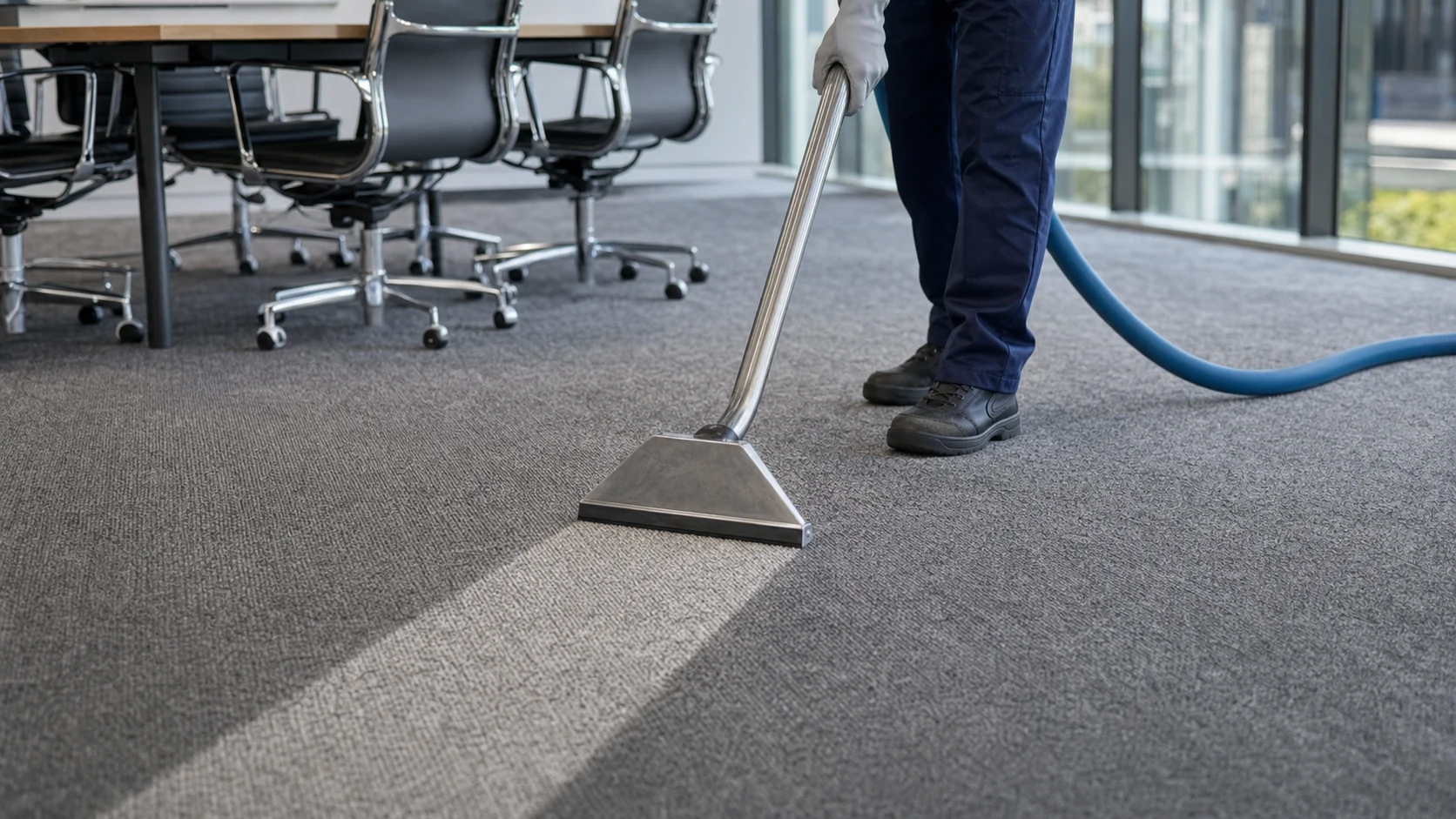
Clean Best completing scheduled periodic carpet cleaning in Sydney

Working in Artarmon and the Lower North Shore

Artarmon on the Lower North Shore holds an unusual concentration of industrial units, showrooms, offices and automotive businesses within a small area, often with a customer-facing frontage and a working bay behind it under one roof. That combination is why the inclusion question here is rarely about frequency and almost always about which side of a roller door a task sits on. Premises are typically tenanted rather than owned, so the condition of shared driveways and thresholds also involves a landlord. Clean Best services Artarmon from Seven Hills and confirms access to workshop areas before any scope is finalised.

Questions about Artarmon

Can cleaners wipe down our hoists and equipment?

Not as part of a standard clean. Equipment needs to be isolated before anything touches it, and that decision belongs to the operator. Cleaners are also not in a position to know which surfaces a service manual excludes from water or detergent. Equipment cleaning stays with the workshop team or with the servicing provider for that plant. The proposal names that exclusion so it does not depend on which cleaner attends.

Is the workshop floor included?

Walking lanes and clear areas are commonly swept as routine work. Bays under vehicles, areas around live equipment and floor sections holding parts or work in progress are excluded because they cannot be reached safely or without moving the client's property. Deep degreasing of concrete is separate work with its own method and its own quote.

Who deals with an oil spill during the day?

Immediate spill response is a workshop function using the site's own kit, because it has to happen when the spill occurs rather than when a cleaner next attends. Cleaners will report what they find and clean around it safely. Used absorbent and contaminated material become a regulated waste and are handled by the site's waste arrangements.

Do you clean the parts washer or the waste oil area?

No. Those areas involve chemicals and waste streams that require specific handling, containment and disposal, and they sit outside a commercial cleaning scope. The proposal names them as exclusions rather than leaving them to be assumed. Where a site needs that work done, it is referred to a provider licensed for the material involved.

Will the reception area still look right if the workshop is excluded?

Yes, provided the threshold between the two is treated properly. Most complaints about a service-business reception trace back to soil carried in on shoes rather than to the reception clean itself. Naming the transition zone as its own item, with a method suited to oil and brake dust, usually resolves the visible problem without extending into the workshop.

Get a fixed written quote for Artarmon

Free walkthrough, scope in writing, price back within 24 hours.

Request a quote
Call nowEmail us