
Mascot NSW 2020

Public areas, guest rooms and linen in a Mascot accommodation building

Accommodation buildings run two cleaning operations that look similar and share almost nothing. Housekeeping turns rooms around against a check-out clock; a commercial contractor maintains the building around them. Mixing the two in one scope helps neither. Separating them is the first decision worth making.

In short

A commercial scope in a Mascot accommodation building typically covers lobbies, corridors, lifts, stairs, public amenities, meeting and function rooms, back-of-house circulation, loading areas, offices and periodic work such as carpet and hard-floor maintenance. Back-of-house corridors and the routes used to move waste are named individually, because they are the areas most likely to sit between two agreements.

Guest rooms, linen handling, laundry, minibar and anything inside a let room sit with housekeeping. Those tasks run to a daily turnaround cycle with its own staffing, inventory and standards. Clean Best states that boundary in the fixed written proposal so the two operations do not overlap or leave a gap.

Why housekeeping and contract cleaning are different operations

Housekeeping is timed against departures and arrivals, works room by room, handles guest property and linen, and reports directly into front office. A contract cleaning operation works to a task list across shared areas, usually outside peak times, and has no involvement with guests. The skills overlap slightly; the operating model does not overlap at all. Trying to combine them typically means the shared areas get whatever time is left after rooms.

That is the practical argument for separating them in a scope. Public areas in an accommodation building are on display continuously and to a demanding audience, and they need attention that is not contingent on how many rooms turned over that morning. A separate agreement protects them, and it gives housekeeping a clear boundary rather than an open-ended list. It also removes the argument about whether a shortfall was a staffing issue or a scope one.
The shared areas that decide the guest impression

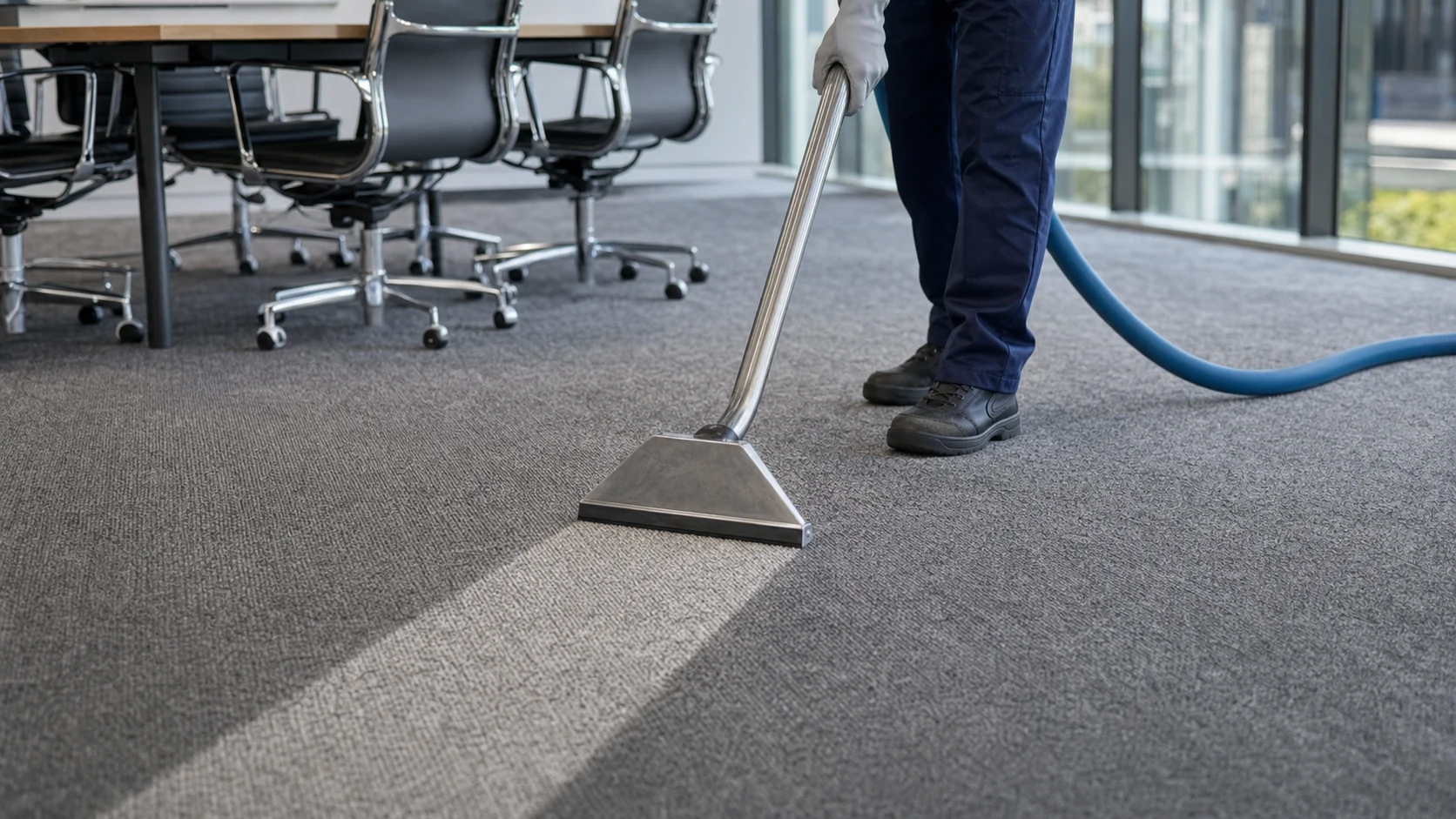
Lobby floors, entry glass, lift interiors, corridor carpet, stair edges, public amenities and the areas around lifts on each level carry the visible standard of the whole building. They also take continuous traffic with luggage, which produces a different pattern of wear from an office. Corridor carpet in particular soils in wheel lines rather than evenly, and it benefits from targeted attention rather than uniform coverage.

Function and meeting spaces need their own treatment because their use is event-driven. A room used for a conference needs a reset and a clean between sessions rather than on a fixed nightly cycle, and catering leaves food waste and spills that will not wait. Those rooms are worth naming separately with an on-request component so a busy week is handled rather than absorbed.

Where the two operations meet

The genuine boundary issues are back-of-house: housekeeping stores, linen rooms, service lifts, trolley parks and the corridors used to move linen and waste. Those spaces get heavy use from housekeeping and are often not in either scope, so they decline steadily. Naming them explicitly and allocating them to one operation is worth more than any adjustment to the public area task list.

Waste is the other meeting point. Housekeeping generates a continuous flow of room waste and linen to a central point, and the contract scope usually covers the bin room and the route from there. Recording who moves what, and to which point, keeps the two operations from either duplicating the work or leaving bagged waste sitting in a service corridor. That single line prevents bagged waste sitting in a service corridor overnight.

Accommodation boundaries for a Mascot building

  • Public areas listed by name including per-level lift lobbies
  • Guest rooms, linen and laundry excluded from the commercial scope
  • Function rooms named with an on-request component
  • Back-of-house stores and service corridors allocated to one operation
  • Corridor carpet treated for wheel-line wear rather than uniformly
  • Waste handover point between housekeeping and the contract scope
Clean Best completing scheduled periodic carpet cleaning in Sydney

Working in Mascot and the Inner South

Mascot in the Inner South carries airport-related businesses, hotels, offices and logistics facilities, with accommodation operating around irregular arrival patterns driven by flight schedules rather than a standard business day. That produces lobby and corridor traffic at hours when a typical commercial building is empty, and it compresses the windows available for periodic work in public areas. Luggage traffic also concentrates wear along specific lines. Clean Best services Mascot from Seven Hills and confirms access windows and the housekeeping boundary at the walkthrough.

Questions about Mascot

Can one contractor cover both rooms and public areas?

They are different operating models rather than different task lists. Housekeeping works to a check-out clock, handles guest property and linen, and reports to front office. Contract cleaning works across shared areas to a task list. Combining them usually means public areas receive whatever time is left after rooms, which is not a reliable arrangement.

Is linen ever part of a commercial scope?

No. Linen handling, laundry and anything inside a let room belong to housekeeping, along with the inventory and standards attached to them. A commercial scope covers the building around those rooms. Keeping the boundary explicit prevents both duplication and the more common problem of back-of-house areas belonging to neither. Both operations keep their own standards and their own records.

Why does corridor carpet wear unevenly?

Because luggage wheels concentrate soil into narrow lines rather than spreading it across the width. Uniform vacuuming treats the whole corridor the same way and under-serves the lines that actually show. Recognising that pattern in the scope allows targeted attention and a periodic extraction cycle focused where the wear genuinely is. The cycle is set against the wear pattern rather than the floor area.

How are function rooms handled?

Event-driven rather than on a fixed cycle. A room used for a conference needs a reset and a clean between sessions, and catering leaves food waste that will not wait until the evening. Naming those rooms separately with an on-request component means a busy week is handled properly rather than absorbed into a routine visit.

Who cleans the housekeeping stores and service corridors?

That needs allocating explicitly, because those spaces take heavy use and frequently sit in neither scope. Whichever operation takes them, naming them is what stops the steady decline that otherwise happens out of sight. It is usually the single most valuable boundary decision in an accommodation building. It is also the boundary most often missed when an agreement is first written.

Get a fixed written quote for Mascot

Free walkthrough, scope in writing, price back within 24 hours.

Request a quote
Call nowEmail us