
Newington NSW 2127

Gardens, pools and letterboxes in Newington common property

Common property is a legal category, not a cleaning category. Plenty of areas an owners corporation is responsible for need a gardener, a pool technician or a maintenance contractor rather than a cleaner, and the scope should say which is which.

In short

A cleaning scope on common property typically covers lobbies, corridors, lifts, stairs, common amenities, bin rooms, the car park's pedestrian areas, letterbox exteriors and the hard surfaces around a pool or garden. Stair nosings, handrails and the entry mats at each lobby are named individually, since those are the surfaces residents contact most.

It excludes garden maintenance, lawn care, pruning, pool water treatment and plant, mail handling, and any repair. Those belong to a gardener, a pool contractor and a maintenance provider. Clean Best names the boundary in the fixed written proposal so an owners corporation can see where each service starts and stops.

The garden line, and why sweeping is not gardening

A cleaning provider sweeps hard surfaces, removes litter from garden beds where agreed, and clears leaf litter from paths and drains. A gardener plants, prunes, mows, feeds, mulches, controls weeds and manages irrigation. The two overlap only in appearance, and the equipment, timing and qualifications are entirely different. Herbicide application in particular requires a chemical user qualification that a cleaning provider does not hold.

The practical division is by surface. Hard surfaces belong to cleaning; planted areas belong to the gardener. That rule survives every season and every layout, and it stops leaf litter becoming a recurring argument about whose responsibility a particular pile is. Where a committee wants one contractor doing both, the two tasks should still be scoped and priced separately. It also keeps each contractor accountable for a defined result.
Pools: the surrounds are cleaning, the water is not

Pool surrounds, coping, furniture, gates, the shower or foot rinse area and the surrounding paving are ordinary cleaning surfaces. Litter and leaf collection from the deck is straightforward. That is the extent of what a cleaning scope covers, and it is worth doing well because it is what residents actually see and touch when they use the space. Furniture and gates in that area are wiped as part of the same routine.

Everything to do with the water is a licensed and technical activity: chemical dosing, testing, filtration, backwashing, pump and plant room work, and record keeping required under health regulations. A pool contractor holds that responsibility and the associated documentation. A cleaning provider skimming a pool or adjusting chemicals would be interfering with a regulated system, so it is excluded without exception. The exclusion is written plainly so no committee member assumes otherwise.

Letterboxes, notice boards and the mail question

Letterbox exteriors, the surrounding wall and floor, and the area where unwanted mail accumulates are cleaning items. What is excluded is handling mail itself: sorting, redirecting, opening or removing items from a box. Even discarded catalogues left on top of a bank of boxes need care, because a cleaner cannot always tell what has been abandoned and what is waiting to be collected.

The workable arrangement is a bin provided at the letterbox area for unwanted mail, which the cleaning scope then empties as ordinary waste. That gives residents a place to put it and keeps the cleaner out of any decision about correspondence. Notice boards follow a similar rule: the glass and frame are cleaned, and nothing posted on them is removed or rearranged.

Common property boundaries in a Newington building

  • Hard surfaces allocated to cleaning, planted areas to the gardener
  • Herbicide and plant care excluded from the cleaning scope
  • Pool surrounds included, water and plant excluded entirely
  • Letterbox exteriors cleaned, mail never handled
  • A bin provided for unwanted mail and emptied as waste
  • Notice board glass cleaned without removing anything posted
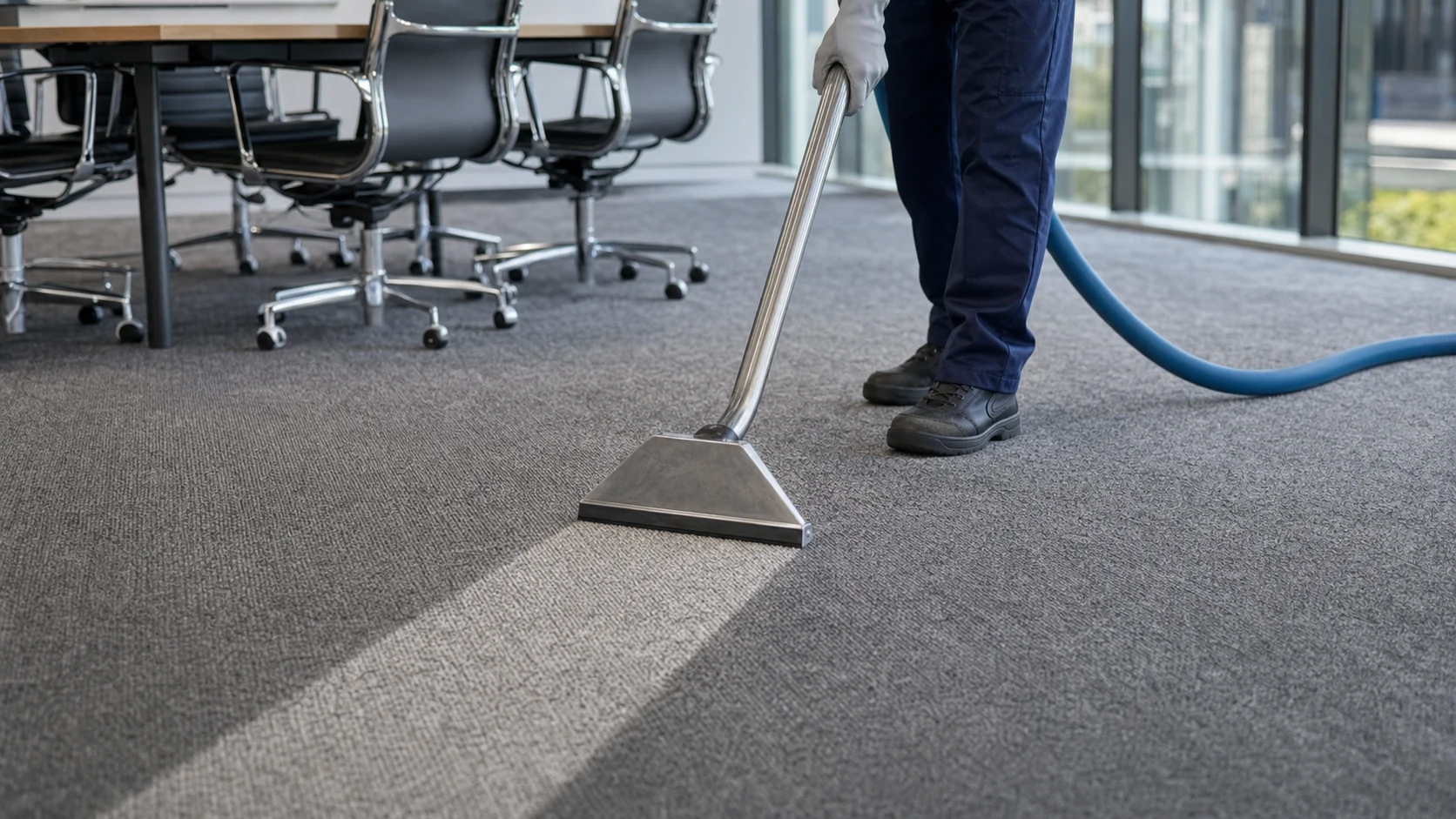
Clean Best completing scheduled periodic carpet cleaning in Sydney

Working in Newington and the Central West

Newington in the Central West combines retail, offices, schools and apartment common areas, with a substantial amount of medium-density residential built around shared landscaped areas, pathways and community facilities. Owners corporations there typically engage several contractors across the same common property, which makes overlaps and gaps easy to create and hard to notice. Landscaped areas are extensive relative to the built footprint, so the garden line matters more than in a high-rise. Clean Best services Newington from Seven Hills and defines the cleaning boundary at the walkthrough.

Questions about Newington

Do cleaners look after the gardens?

No. Cleaning covers hard surfaces, litter and leaf clearance from paths and drains. Planting, pruning, mowing, feeding, mulching, weed control and irrigation belong to a gardener, and herbicide application requires a chemical user qualification. Dividing responsibility by surface rather than by material is what keeps the boundary workable through every season. The scope names the hard surfaces individually so nothing sits between the two contractors.

Is the pool included in common area cleaning?

The surrounds are: coping, paving, furniture, gates and the rinse area, along with litter and leaf collection from the deck. The water is not. Chemical dosing, testing, filtration, plant room work and the associated record keeping are a licensed activity handled by a pool contractor and excluded from the cleaning scope entirely.

Can cleaners clear the junk mail?

They can empty a bin provided for it, which is the arrangement that works. Handling mail itself, including removing items left on top of a letterbox bank, is avoided because a cleaner cannot always tell what has been abandoned and what is waiting for collection. A bin at the letterbox area solves it without any judgement.

What about notices on the board in the lobby?

The glass and frame are cleaned and nothing posted is removed or rearranged. Notices belong to the owners corporation or to residents, and removing something that is still current creates a problem. Where a board needs clearing, that is done by whoever manages the building rather than during a cleaning visit. That keeps responsibility for the board with the committee.

Why not have one contractor do everything?

A committee can engage one provider for several services, but the tasks should still be scoped and priced separately. That keeps each activity visible, allows any one of them to be changed without reopening the rest, and keeps qualifications and records with the right party, which matters particularly for chemical use and pool water.

Get a fixed written quote for Newington

Free walkthrough, scope in writing, price back within 24 hours.

Request a quote
Call nowEmail us