
Botany NSW 2019

Where an internal Botany cleaning scope ends and the yard begins

On a logistics site the dirtiest surface is usually outdoors, and it is usually outside the cleaning scope. Understanding why the yard at a Botany facility is a different service, with different plant, saves a long argument about presentation. The distinction is about plant and traffic control rather than willingness.

In short

A standard scope at a Botany logistics premises covers the internal areas: office, amenities, crib room, meeting rooms, internal walkways and the swept lanes inside the warehouse. External hardstand, truck aprons, driveways, kerb lines and drainage grates are excluded from routine work. So are drainage pits and any bunded containment area on the site.

The reason is equipment. Yards need a ride-on or truck-mounted sweeper working around live vehicle movements, which is a different operation from an internal clean. Clean Best states the external boundary in the fixed written proposal, and where a yard sweep is genuinely required it is described and quoted as separate work.

What the internal inclusion list realistically covers

Inside the building, routine work is well defined: amenities and crib rooms cleaned properly because they take heavy shift use, office and administration areas treated as ordinary commercial space, internal glass at hand height, waste collected to the nominated point, and pedestrian walkways swept so the line markings stay visible. That last item is worth naming, because a walkway that disappears under dust is a safety issue rather than a presentation one.

Warehouse floor coverage is more limited than people expect. Lanes in use are swept; areas under stock, inside racking bays and behind staged freight are not, because reaching them means moving somebody's goods. On a site where freight turns over constantly, the honest description is that coverage follows what is clear on the day, and the proposal should say so rather than implying full floor coverage.
Why the yard is a different service entirely

A truck apron accumulates tyre rubber, spilled product, dust, litter and organic matter, and it is measured in thousands of square metres rather than hundreds. Sweeping it by hand is not a serious proposition. The work needs mechanical plant, an operator trained for it, and a traffic management arrangement so the machine and the trucks are not sharing the same space at the same time.

That last point is what really separates it from internal work. Yard cleaning happens around live vehicle movements at a port-adjacent facility, and coordinating it is a site operations task before it is a cleaning one. Treating it as a scheduled external service, with an agreed window and an agreed traffic plan, produces a result. Adding it to an internal scope produces neither the plant nor the window.

Drains, spills and the containment boundary

External areas at a logistics site usually drain to a system with its own compliance requirements. Anything that washes off a hardstand may be regulated, which means water blasting an apron is not a decision a cleaning provider makes on the day. Grates, pits, interceptors and bunded areas are excluded from a cleaning scope entirely and belong to the site's environmental and maintenance arrangements.

Spills follow the same logic. A cleaner encountering an unidentified liquid on a yard or a dock stops, isolates the area if it is safe to do so, and reports it. Identifying the substance and managing the clean-up is the site's responsibility, using its own spill procedure and, where the material requires it, a licensed contractor. That stop-and-report response is written in as the expected behaviour.

Internal and external boundaries at a Botany facility

  • Which internal areas are covered on every attendance
  • How warehouse floor coverage is described relative to stock
  • Pedestrian walkways named so line markings stay visible
  • Explicit exclusion of hardstand, aprons and driveways
  • Whether a mechanical yard sweep is scheduled separately
  • The stop-and-report rule for unidentified spills
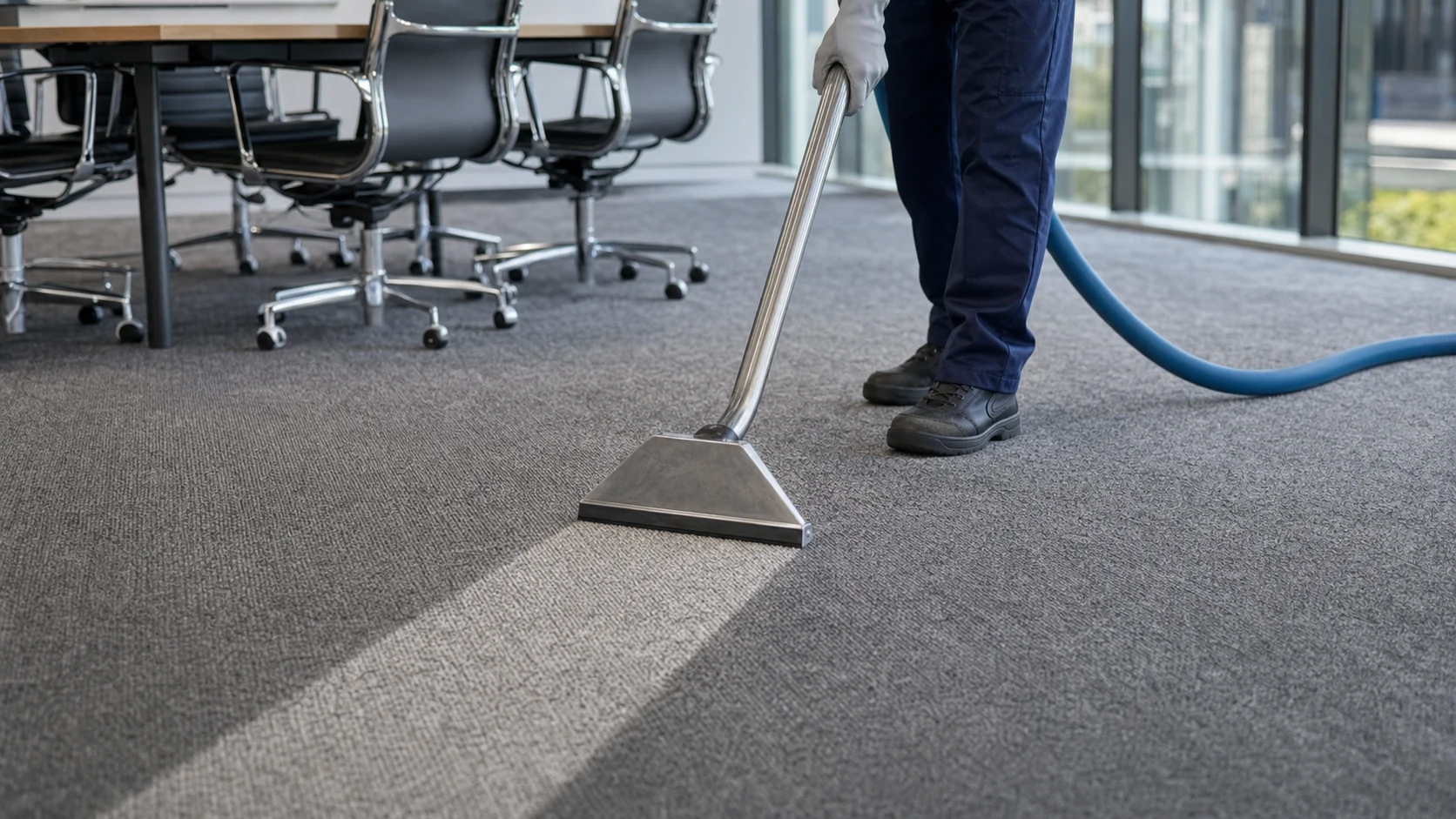
Clean Best completing scheduled periodic carpet cleaning in Sydney

Working in Botany and the Inner South

Botany in the Inner South is dominated by industrial, logistics, warehousing and port-related premises, where the built footprint is often smaller than the paved area around it and vehicle movement continues for most of the day. Sites here also tend to sit within environmental controls tied to stormwater and to the surrounding waterway, which affects what can be washed off an external surface and when. That makes the yard boundary a compliance question rather than a presentation preference. Clean Best services Botany from Seven Hills and confirms internal coverage and site access requirements before a scope is issued.

Questions about Botany

Is the truck apron included in our cleaning agreement?

Not in a standard internal scope. External hardstand needs mechanical sweeping plant, a trained operator and a traffic arrangement that keeps the machine clear of live vehicle movements. It is described and quoted as separate work with its own window, because attaching it to an internal visit provides neither the equipment nor the time. The window itself is agreed with site operations rather than assumed.

How much of the warehouse floor is actually cleaned?

The lanes and areas that are clear on the day. Space under stock, inside racking bays or behind staged freight is not reached, because that would mean moving goods the cleaner cannot assess for weight or fragility. The proposal describes coverage in those terms so it matches what happens rather than an ideal empty floor.

Can you pressure wash the loading dock?

Only after the drainage question is answered. Water leaving a hardstand at a port-adjacent site may be subject to environmental controls, so where the run-off goes has to be established first. Where it is permissible, the work is scheduled as its own item. Where it is not, the limitation is recorded rather than quietly worked around.

What do cleaners do if they find a spill outside?

They stop, avoid contact, isolate the area if that can be done safely and report it to the site contact immediately. Identifying an unknown substance is not something a cleaner is equipped to do, and attempting to clean it could make the situation worse. Clean-up follows the site's own spill procedure and, where required, a licensed contractor.

Are the crib rooms treated differently to an office?

They usually need more attention, not less. Shift facilities take concentrated use across a long day, with food waste and heavy touchpoint contact, so tables, benches, microwaves exteriors, sinks, floors and bins are core routine items there. Naming the crib room separately from general office areas is what keeps that difference visible in the scope.

Get a fixed written quote for Botany

Free walkthrough, scope in writing, price back within 24 hours.

Request a quote
Call nowEmail us