
Leichhardt NSW 2040

Upholstery, partitions and soft surfaces in a Leichhardt workplace

Fabric surfaces are the quietest problem in a workplace. Nobody notices a chair or a partition getting dirtier because it happens evenly and slowly, and no routine task list has ever addressed it. That makes it a periodic item or nothing at all.

In short

Routine work on soft surfaces is limited to vacuuming accessible upholstery, spot treating fresh marks where the fabric allows, and wiping hard frames, arms and bases. That is genuinely useful and it is the practical extent of what fits in a normal visit. Headrests and armrest tops receive particular attention because they take the most contact.

Deeper treatment of upholstered seating, fabric partitions, acoustic panels and soft wall finishes is periodic work with its own method, drying time and price. Clean Best names those items in the fixed written proposal with the fabric type recorded, so the right method is used and the result is predictable.

Why soft surfaces get missed

Hard surfaces show dirt as a mark against a clean background, so they demand attention. Fabric absorbs soil evenly, so a chair that is measurably dirtier than it was a year ago looks much the same as it did last week. Nobody complains, so nobody schedules anything, and the deterioration is only obvious when a new chair sits beside an old one or a partition is moved and the shadow shows.

That means fabric care has to be planned rather than triggered. Putting upholstery and partitions on a stated cycle is the only reliable approach, because there is no visible signal to prompt a request. The cycle can be modest, but it needs to exist in writing, otherwise the item joins the list of things a scope mentions and nobody has ever done.
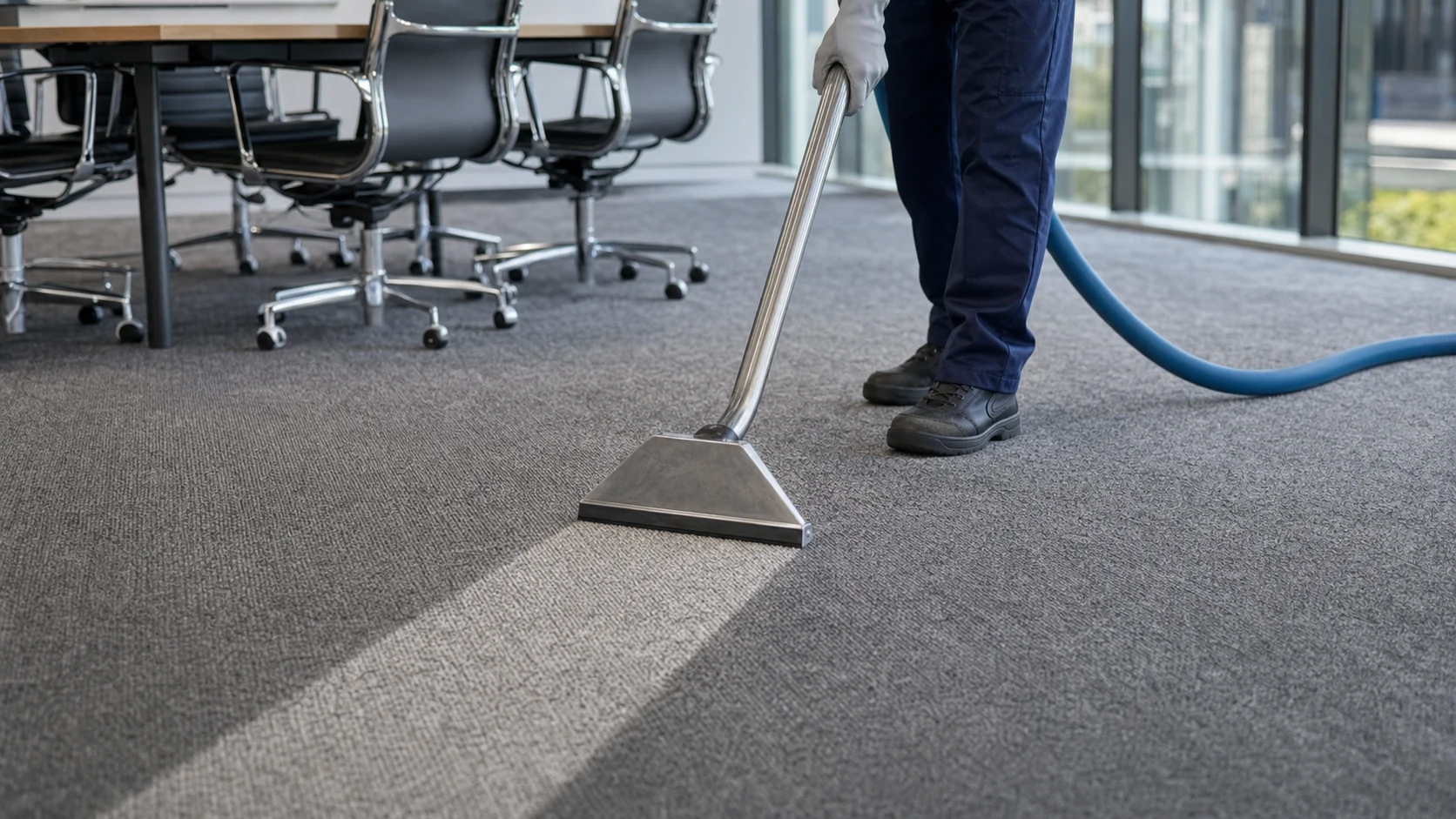
Fabric type decides the method and the risk

Commercial upholstery, wool blends, vinyl, mesh task seating and acoustic panel fabric all respond differently. Some tolerate hot water extraction; some shrink, watermark or lose colour with it. Others need a low-moisture encapsulation method or dry compound. Choosing without knowing the fabric is how a chair ends up with a ring around the treated area, which looks worse than the original soil.

Where labels exist, they should be read and recorded at the walkthrough. Where they do not, an inconspicuous test is the sensible precaution before treating anything visible. This is a straightforward professional step, but it only happens if the scope treats fabric as a specified item rather than as part of a general cleaning line covering everything in a room. Recording it also means a relief team uses the same method as the regular one.

Partitions, acoustic panels and the surfaces at desk level

Fabric partitions between desks collect hand contact along their top edge and airborne soil across their face, and they sit directly in a worker's field of view. Vacuuming with a brush head handles most of it; marks along the top edge respond to spot treatment. A full clean is a periodic exercise, and it needs the desks clear enough for someone to work along both faces.

Acoustic wall panels and soft ceiling baffles are the same material problem at a higher level. They are usually above safe reach, which places them alongside other high-level work, and they are often more fragile than they look. Naming them as periodic items with an access method stated keeps them on the plan rather than in the category of things everyone can see and nobody has costed.

Soft surface items to specify in Leichhardt

  • Routine vacuuming and spot treatment of accessible upholstery
  • Hard frames, arms and bases wiped as touchpoints
  • Fabric types recorded at the walkthrough with any labels noted
  • A stated method matched to each fabric, with testing before treatment
  • Partitions listed with the condition that desks are cleared
  • Acoustic panels placed with high-level work and its access method
Clean Best completing scheduled periodic carpet cleaning in Sydney

Working in Leichhardt and the Inner West

Leichhardt in the Inner West carries retail, hospitality, offices and community facilities, with many workplaces fitted out in converted buildings where acoustic treatment and fabric partitions do a lot of work in rooms that were never designed as offices. Those soft finishes are often extensive and often the oldest element in the fit-out, since they outlast several rounds of furniture. That combination makes a stated periodic cycle more useful than an occasional request. Clean Best services Leichhardt from Seven Hills and records fabric types and access conditions when the periodic list is written.

Questions about Leichhardt

Is upholstery cleaning part of a regular office clean?

Vacuuming accessible seating and spot treating fresh marks is, along with wiping frames and arms. Deeper treatment is periodic work with its own method, drying time and price. Fabric soils evenly rather than visibly, so it needs a stated cycle rather than waiting for someone to notice and request it. The cycle is written into the proposal rather than left to be requested.

Why does the fabric type matter so much?

Because methods that suit one fabric damage another. Some upholstery tolerates hot water extraction; others shrink, watermark or lose colour. Mesh task seating and acoustic panel fabric need different approaches again. Recording the fabric at the walkthrough, and testing inconspicuously before treating anything visible, is what prevents a treatment looking worse than the soil.

Can desk partitions be cleaned without clearing the desks?

Vacuuming and spot treatment along the top edge can usually be done around a working desk. A full clean needs access to both faces, which means the desks either side have to be clear. That is why partitions are listed as a periodic item with the clearing condition stated rather than added to a routine visit.

What about acoustic panels on the walls and ceiling?

They are usually above safe reach, which places them with other high-level work and its access requirements. They are also often more fragile than they appear. Listing them as periodic items with a stated access method keeps them on the plan instead of leaving them as a visible surface nobody has ever costed.

How often should soft surfaces be treated?

That depends on use, occupancy and the fabric itself rather than on a standard interval. The walkthrough looks at current condition and the proposal sets a cycle the business can review against what it sees. What matters most is that a cycle exists in writing, because fabric gives no visible prompt to trigger a request.

Get a fixed written quote for Leichhardt

Free walkthrough, scope in writing, price back within 24 hours.

Request a quote
Call nowEmail us