
Westmead NSW 2145

Controlled clinical and research areas in Westmead premises

In a research or clinical building the cleaning boundary is set by control rather than by dirt. Some rooms have an entry protocol, a documented cleaning regime and equipment nobody outside the team should approach, and a commercial scope stops at their doors.

In short

A commercial scope in a Westmead research or healthcare premises covers offices, meeting rooms, corridors outside controlled areas, amenities, staff facilities, waiting and reception areas, general waste and building circulation. Lift lobbies, stairs and shared circulation between those areas are covered on the same basis, along with the general waste generated in them.

Controlled laboratories, containment areas, clean rooms, sample storage, procedure rooms and any space with a documented cleaning protocol are excluded and remain with the responsible team or a specialist provider. Clean Best names each excluded space in the fixed written proposal alongside its owner. Nothing in the scope overlaps that regime.

Why control, not cleanliness, sets the boundary

A controlled area has a documented regime specifying who enters, in what order, wearing what, using which products and recording what afterwards. Introducing a general cleaner into that regime breaks it in both directions: material may be carried in, and material that should stay inside may be carried out. The issue is not competence but the integrity of a system somebody is accountable for.

Equipment adds a second layer. Sample storage, incubators, analysers, controlled-temperature units and calibrated instruments are sensitive to disturbance, vibration and moisture, and a single wiped-over control panel can invalidate work in progress. Excluding those spaces by name is far safer than relying on a general instruction to be careful around equipment. The exclusion is written against the room rather than left to a judgement about equipment.
What the commercial scope contributes

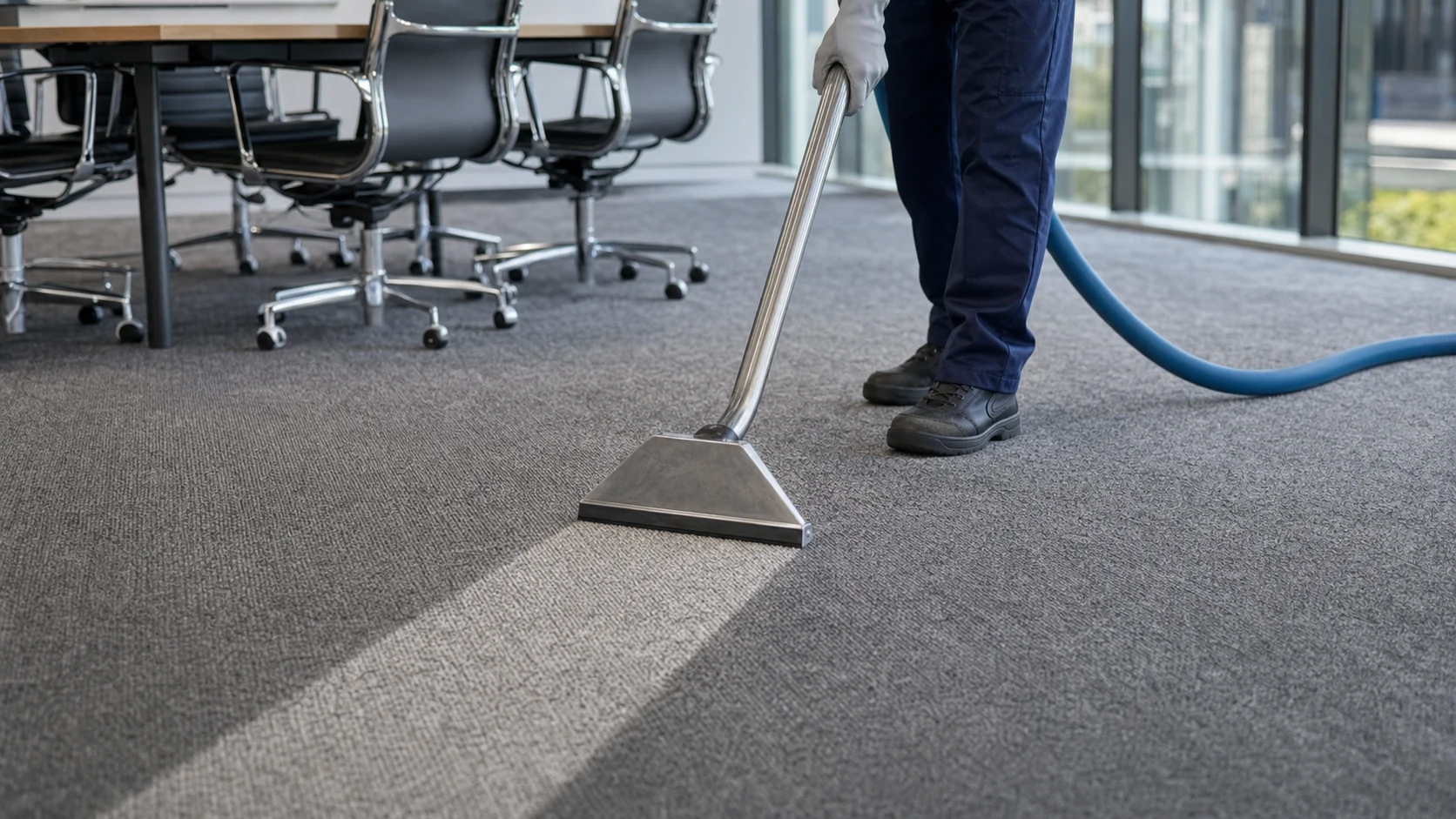
The non-controlled areas of a research or health building are extensive and heavily used: offices, write-up spaces, meeting rooms, corridors, lifts, amenities, tea rooms and waiting areas. Those spaces carry the ordinary hygiene and presentation load of a large workplace, and doing them consistently is a substantial contribution that frees clinical and scientific staff from work they should not be doing. Doing that work reliably is also what allows the site's own staff to concentrate on the controlled environments they are accountable for.

The corridors and thresholds around controlled areas deserve specific attention. They are the transition zones where material moves in and out, and keeping them properly maintained supports the controlled regime without entering it. Naming those thresholds in the scope, with an agreed method, is more useful than treating them as ordinary circulation. Those thresholds are named individually in the scope with the method agreed.

Waste, access and the documented answer

Waste in these buildings is heavily segregated: general, recycling, clinical, cytotoxic, chemical, radioactive and biological streams may all be present. A commercial scope handles general and recycling only, identified by container and liner colour, and everything else stays within the responsible team's own arrangement with its licensed collector. That rule is absolute and is stated rather than assumed. The container and its liner colour identify the stream, so nobody has to judge what is inside it.

Access is the other item to settle. Controlled areas are usually behind card access with a logged entry, and a cleaning provider should not hold that access. Where an excluded room needs periodic attention, it is arranged with the team present or by a provider engaged specifically for controlled environments. Recording that in the scope means an auditor gets a definite answer about every space.

Controlled area boundaries for a Westmead premises

  • Each controlled space named with its responsible team
  • A written statement that access is not held by the cleaning provider
  • Thresholds and approach corridors named with an agreed method
  • General and recycling waste only, identified by container
  • All regulated streams excluded and left to licensed arrangements
  • A definite answer available for every space in the building
Clean Best completing scheduled periodic carpet cleaning in Sydney

Working in Westmead and the Greater Parramatta

Westmead in Greater Parramatta is defined by hospitals, medical research, healthcare and education facilities, with buildings that combine ordinary office and meeting space alongside laboratories, containment areas and clinical zones under documented protocols. That mixture within a single floor is what makes the boundary conversation unavoidable rather than optional. Access in those buildings is card-controlled and logged, which shapes where a commercial provider can work. Clean Best services Westmead from Seven Hills and names each excluded space and its owner in writing.

Questions about Westmead

Why are laboratories excluded from the cleaning scope?

Because a controlled area has a documented regime covering who enters, in what order, using which products, with records afterwards. A general cleaner entering breaks that regime in both directions. It is a question of system integrity and accountability rather than competence, and it applies regardless of how the room looks. The room is named rather than described by category.

What about equipment inside those rooms?

Sample storage, incubators, analysers, controlled-temperature units and calibrated instruments are sensitive to disturbance, vibration and moisture, and a wiped control panel can invalidate work in progress. Excluding the whole space by name is safer and clearer than relying on a general instruction to be careful around equipment. That approach also removes any ambiguity for a relief cleaner.

Which areas does the commercial scope cover?

Offices, write-up spaces, meeting rooms, corridors outside controlled areas, lifts, amenities, tea rooms, waiting and reception areas, and general building circulation. Those spaces carry the ordinary hygiene load of a large workplace, and covering them consistently frees clinical and scientific staff from work they should not be doing. Thresholds around controlled areas are named separately.

How is waste handled in these buildings?

General and recycling only, identified by container and liner colour. Clinical, cytotoxic, chemical, radioactive and biological streams stay entirely within the responsible team's own arrangement with its licensed collector. The rule is absolute and stated in the scope rather than left to a judgement about what a container appears to hold. Each stream is listed by name in the exclusion section.

Should the cleaning provider hold access to controlled areas?

No. Those areas are usually behind logged card access for a reason, and a provider holding that access dilutes the record. Where an excluded room needs periodic attention, it is arranged with the responsible team present or through a provider engaged specifically for controlled environments. That keeps the access log meaningful for the team accountable for it.

Get a fixed written quote for Westmead

Free walkthrough, scope in writing, price back within 24 hours.

Request a quote
Call nowEmail us